
How Matt Medeiros Uses LifterLMS to Turn Education Into Sponsorship Infrastructure
Matt Medeiros didn’t create a course to sell access. He created a course to support a business model.
Built with LifterLMS, Hosting Decoded is a free course designed for WordPress agencies and freelancers. It helps them make better hosting decisions for client projects while giving vetted hosting companies a credible, high-trust way to reach people who influence real purchasing decisions.
There’s no paywall, no affiliate push, and no single vendor endorsement. Instead, the course functions as sponsor-funded education infrastructure. It delivers practical value to learners while supporting revenue growth through sponsorships aligned with the audience and the topic.
This case study shows how education can operate as a commercial asset without becoming a product, and how LifterLMS enables that model in a way that is repeatable, scalable, and sponsor-safe.

Matt Medeiros
Community, Gravity Forms.
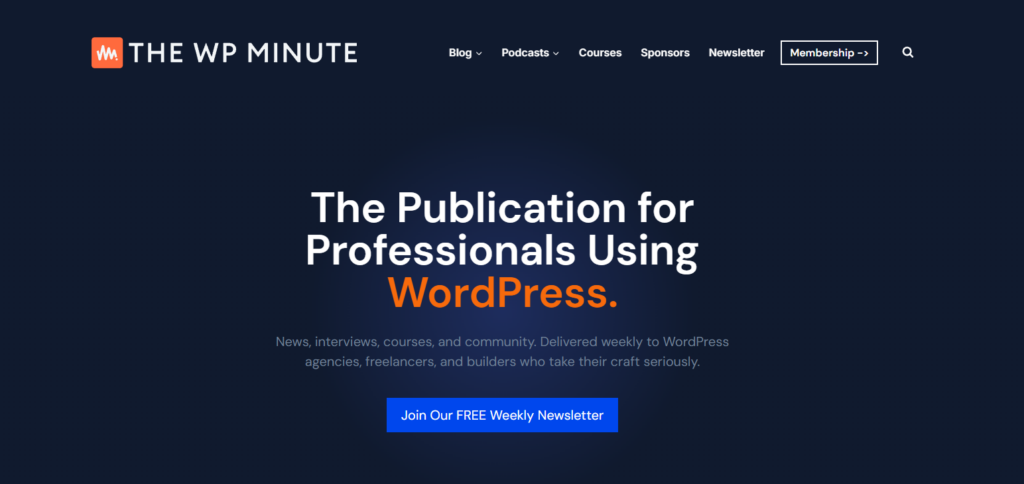
WordPress News, The WP Minute.
Podcast Growth, The Podcast Setup.
The Experience Behind the Model
Matt Medeiros has spent more than a decade working inside the WordPress ecosystem from multiple angles.
He has run a WordPress agency, built and hosted large content platforms, and worked within product and hosting companies, including Pagely, Castos, and Gravity Forms. Over that time, he has seen how agencies make infrastructure decisions, how hosting failures damage client relationships, and how education is often missing where it matters most.
That perspective shaped the course from the start. This wasn’t an abstract training exercise. It was built by someone who has deployed WordPress at scale, sold services, supported clients, and navigated sponsorship-driven media businesses.
The result is a course designed around real decisions, not theoretical best practices.

“WordPress news media is a challenging space. Not a lot of people really care about the inside baseball. Those of us who do care really care, but it’s a small group.”
—Matt Medeiros, Gravity Forms
The Structural Problem With WordPress Media
WordPress media businesses face a structural challenge.
Audiences are engaged but fragmented. News, podcasts, and newsletters attract attention, but attention alone is rarely enough to sustain long-term commercial partnerships. Sponsors want more than reach. They want context, credibility, and association with outcomes that matter to their customers.
Matt Medeiros has spent more than a decade building audiences in the WordPress ecosystem. Through projects like The Matt Report and later The WP Minute, he developed a strong reputation for consistency and insight.
But news-driven content has limits.
“WordPress news media is a challenging space,” Matt explains. “Not a lot of people really care about the inside baseball. Those of us who do care really care, but it’s a small group.”
At the same time, agencies and freelancers face daily decisions that have long-term consequences. Hosting choices affect performance, security, client trust, and the health of agency relationships. These are decisions with financial and reputational impact, yet they are often made with limited guidance.
That gap created an opportunity.
Matt didn’t need more content. He needed a way to create depth, usefulness, and proximity to real decisions.
And education offered a path forward.
Why Education Became the Strategic Pivot
The decision to build a course wasn’t about expanding into a new content format, but rather anchoring the entire business more firmly to value.
“My only way to move the business forward is to get closer to the audience,” Matt says. “The course is how I get closer to that person and actually help them.”
Unlike newsletters or podcasts, a course creates structure and intent. It asks learners to invest time, and that investment filters for seriousness and signals trust, while also creating a natural environment for sponsors who want association with competence rather than noise.
The course didn’t replace existing content. It gave it a center of gravity. And everything else now pointed somewhere.
Why Hosting Was the Right Starting Point
The first course needed to solve a problem agencies actually face, and hosting was a natural choice.
Poor hosting decisions are one of the most common causes of client dissatisfaction in WordPress projects. Slow performance, downtime, security incidents, and support failures are all frequently blamed on WordPress itself when the real issue is infrastructure.
Matt had seen this from every angle. As a former agency owner, a systems administrator, and later as part of hosting and WordPress product companies, he understood how hosting decisions shape the client experience.
“The bad rap a lot of clients have with WordPress is mostly rooted in hosting,” he explains. “Too slow. Security breaches. Support issues. All of it comes back to hosting.”
The course focuses on the business side of hosting decisions rather than technical specifications. It helps agencies evaluate projects, understand client needs, and choose appropriate hosting environments based on real constraints.
Crucially, it doesn’t recommend specific providers. That neutrality protects trust with learners and credibility with sponsors.
Why the Course Is Free
Charging for the course would have been straightforward, but Matt chose a different route.
“The revenue stream for The WP Minute is sponsorship,” he says. “The course is free because sponsors appear alongside the education, not inside it.”
This distinction matters. Hosting companies already sponsor The WP Minute because agencies influence hosting decisions. The course deepened that relationship by offering a space where sponsors could support learning without dictating outcomes.
Sponsors aren’t buying placement in content; they’re supporting an asset that educates their future customers.
That makes the sponsorship easier to justify internally, and it also reduces risk. Association with neutral, high-quality education is safer than endorsement-style advertising, especially in a market where trust is hard-won.
The course doesn’t promote discounts or dashboards. It builds understanding, which benefits agencies and hosting providers alike.
Building the Course With LifterLMS
To work, the course needed to feel legitimate, with structure, progression, and a clear sense of completion. It also needed to launch without months of custom development.
LifterLMS provided that foundation.
Working with Eric Karkovack, a web designer and editor at The WP Minute, Matt used LifterLMS to:
- Organize lessons into a clear learning path
- Gate access without friction
- Include a quiz to reinforce understanding
- Issue certificates on completion
These elements weren’t cosmetic. Together, they turned the course into something agencies could use, reference, and share.
Certification as a Credibility Tool
The certificate awarded at the end of the course became one of its most practical features. Initially, it was added almost as a bonus, but its real value emerged through use.
“There are a lot of WordPress companies where not everyone knows everything about WordPress,” Matt explains. “Could these certifications serve as training tools for agencies and product companies?”
Agencies began using the course internally to train staff. Project managers and team members could complete the course, pass the quiz, and demonstrate a baseline understanding of hosting decisions.
Externally, certificates became conversational proof. A freelancer on a sales call could reference the course as evidence of competence. The certificate did not need formal accreditation; it needed relevance.
LifterLMS made that possible without additional tooling or overhead.
Education That Goes Beyond Video
The course includes more than video lessons.
Learners receive downloadable slides and checklists, but one of the most distinctive elements is an interactive hosting calculator built by Matt using Automattic’s AI tools.
By entering project requirements, learners receive guidance on which hosting tier best fits the project. This reinforces the course’s purpose. It turns theory into application, giving agencies something they can use immediately.
Sponsor Outcomes and Commercial Impact
The commercial impact was immediate.
“I was immediately able to close deals with hosting sponsors when I launched the course,” Matt says. “That was part of the strategy.”
Sponsors saw value in being associated with a resource that educated their core audience. The course became a concrete asset in sponsorship conversations, not just a supporting link.
It also changed the tone of those conversations.
“I feel way more confident now saying, ‘Please support The WP Minute,’ because I have this course,” Matt explains. “It’s not just ‘follow the podcast.’ It’s ‘come in, take the course, and get better at WordPress.’”
Education shifted sponsorship from exposure to alignment. Sponsors were no longer buying attention; they were supporting outcomes.
Why This Model Is Repeatable
This approach doesn’t depend on personality or scale. Matt’s audience and reputation helped, but the mechanics of the model are portable.
The repeatable components are clear:
- A focused audience with real decisions to make
- A high-friction problem worth structured education
- A free course that removes barriers to entry
- Sponsor funding that aligns with the topic, not the message
- Certification that adds tangible value
A plugin company could educate users. An agency collective could train members. A SaaS brand could support partners.
The key is not selling courses. It’s using education to create qualified attention and durable trust.
Why LifterLMS Makes This Viable
Many teams never test models like this because complexity kills experiments.
Custom development, certification systems, and gated access introduce cost and delay. By the time the course launches, momentum is gone.
LifterLMS lowers that barrier.
It allows teams to launch quickly, test ideas, and iterate without committing to bespoke infrastructure. Certification, quizzes, and access control work together, not as bolt-ons.
That speed matters. It turns education from a long-term gamble into a practical business tool.
Who Should Pay Attention to This Approach
This model is relevant to more than course creators.
It applies to:
- Media-led WordPress brands seeking sustainable sponsorship
- Plugin and SaaS companies educating users and partners
- Agencies building authority without selling courses
- Sponsors looking for qualified, decision-ready audiences
It reframes education as infrastructure rather than marketing.
What This Case Study Ultimately Shows
This isn’t a content marketing tactic, it’s a business design decision.
Matt Medeiros used LifterLMS to create a free course that pays for itself, strengthens sponsor relationships, and deepens audience trust. The course is not the product, it’s the foundation.
For sponsors and partners, this approach offers a more durable alternative to impression-based marketing. For platform users, it shows how education can support growth without becoming a sales funnel.
That combination is both deliberate and repeatable.
Interested in Building Education That Supports Your Business?
This case study shows one way education can function as infrastructure rather than a product.
If you’re a sponsor, partner, or platform-led business exploring how structured education could support your audience, strengthen partnerships, or create new commercial opportunities, LifterLMS can help you get there.
LifterLMS helps you:
- Launch structured courses
- Issue certificates
- Manage access
All without custom development or long lead times so you can test ideas quickly and build on what works.
Ready to get started?