
How Student Confidence Coach Anita van Rooyen Built a Mission-Driven Education Platform for Institutions
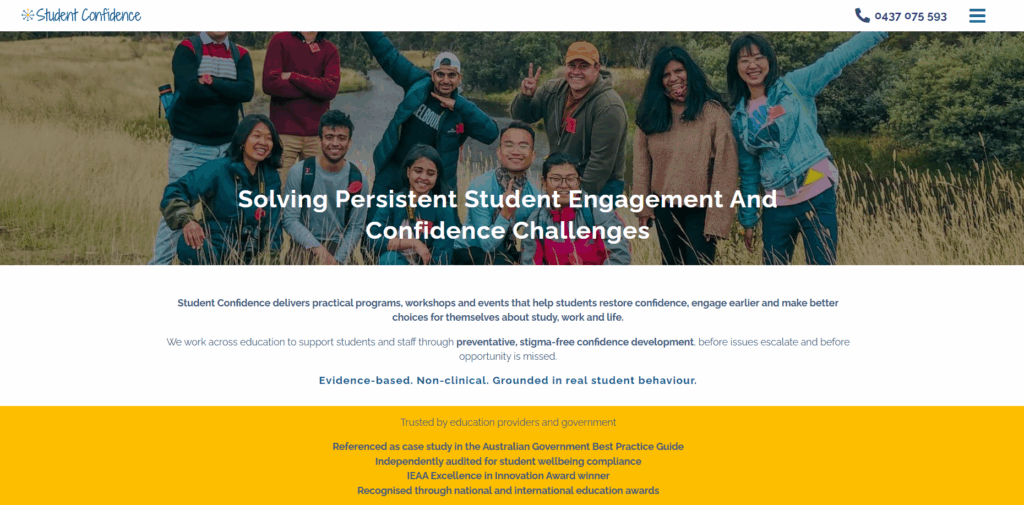
Anita van Rooyen built Student Confidence to help international students develop confidence, resilience, and practical life skills. Using LifterLMS, she turned that mission into a scalable program that universities and colleges can purchase for entire cohorts.
- 5,000+ student enrollments sold through group access
- 3 core courses delivered through cohort-based programs
- Programs reused across multiple institutional intakes

Anita van Rooyen, Student Confidence
Success Story Highlights
5,000+ Enrollments
3 Core Courses
Multi-Intake Cohort Model
A Mission Rooted In What Students Face Every Day
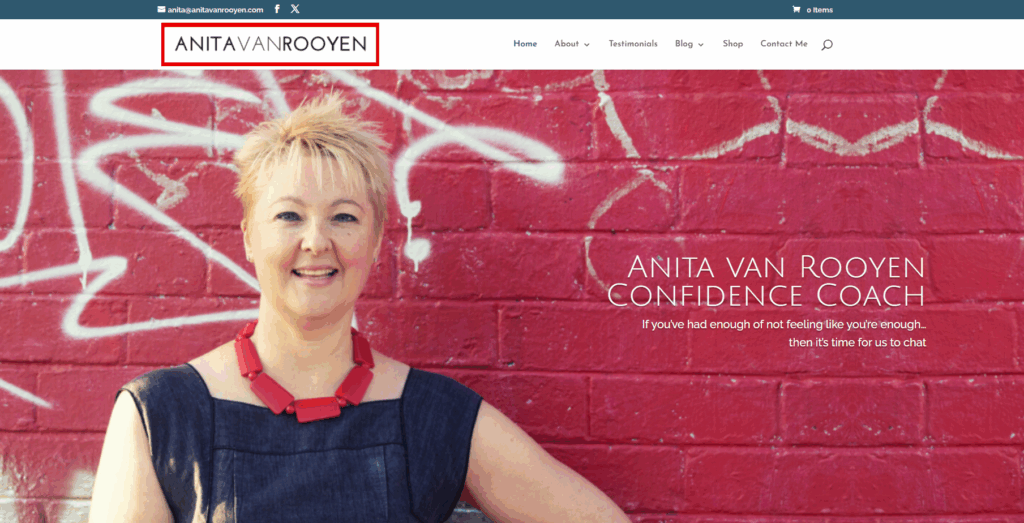
Anita van Rooyen is a student confidence coach based in Australia. She helps students build confidence and wellbeing so they can handle the practical and emotional demands of study, work, and life. Her work focuses heavily on international students, who often arrive in a new country with strong goals and high expectations, then hit a wall when everything familiar disappears at once.
Even students who felt confident at home can struggle when they land somewhere new. They lose their routines, their support networks, and the comfort of knowing how things work.
Small tasks quickly turn into stress points: navigating public transport, shopping for essentials, booking appointments, meeting people, speaking up in class, or even understanding social cues that locals take for granted.
Anita saw that this drop in confidence isn’t a character flaw. It’s a predictable response to uncertainty, cultural difference, and language pressure. When students feel overwhelmed, they pull back. They participate less, take fewer risks, and can start to feel isolated. That change affects more than a student’s personal experience. It shapes outcomes institutions care about deeply.

“I’m not a tech person. I needed something I could manage by myself as a new founder. I tried another LMS and it was so complicated and overwhelming. I just went back to Lifter because it’s simple. Simple is good in my world. I don’t need things to be overcomplicated.”
—Anita van Rooyen, Student Confidence
The Problem Institutions Are Trying To Solve At Scale
Universities and colleges already invest in student support. The challenge is delivering consistent help across large, diverse cohorts, then showing evidence that support makes a difference.
Many support services sit in silos: counseling teams operate separately from academic departments, student success teams often run their own initiatives, and accommodation providers may have their own programs. All of it can be well-intentioned, yet disconnected.
From the institution’s perspective, three outcomes drive urgency:
- Retention
- Engagement
- Completion
Anita frames it in language that sticks: stay, play, pay.
Students stay enrolled. Students play their part in campus life and learning. Students pay their fees because they remain enrolled and progressing.
When students disengage, the cost is real – institutions lose fees, lose progression data, and face higher support burdens as problems escalate.
Anita learned that institutions rarely buy “wellbeing” as an abstract idea; they buy outcomes. They buy programs that reduce attrition risk, increase engagement, and support completion. Her mission stayed the same, but her positioning got sharper: her platform supports wellbeing in a way that helps institutions reach the outcomes they measure.
From One-To-One Coaching To Cohort-Based Delivery
Anita began her work with a traditional coaching model: one client at a time. It created an impact, but it also restricted scale. One-to-one delivery demands constant time input, which slows growth. It also keeps support out of reach for many students who cannot afford to pay out of pocket.
She recognized a better match for the sector. Institutions already have budgets for student services, student success initiatives, and retention programs. Students often don’t. So she built a model in which the institution pays, and students receive access as part of their support ecosystem.
That shift changed everything.
It meant Anita needed to deliver content to large groups, separate cohorts by provider and intake period, and show institutions what students actually used.
It also meant the platform had to stay manageable for a small team, because she was still building carefully and staying cash-flow conscious.
“I started one-to-one and realised it was a hard slog, so I shifted to a model where universities and colleges pay and students get access as a cohort.“
Why She Built On WordPress And Chose LifterLMS
Anita describes herself as someone who wanted a platform she could run without deep technical skills. She wasn’t trying to build a custom learning system from scratch. She wanted a tool that felt approachable, supported, and flexible enough to grow with her.
She found LifterLMS while researching how to build and sell online courses. What stood out for her was the ability to start without a huge upfront commitment, to be able to test the concept, and still deliver a professional experience. For a founder building on a limited budget, that really mattered.
“I chose LifterLMS because I could actually use it myself, without technical expertise, and still deliver a professional platform.“
She wanted control over her own platform, not a marketplace model where you lose direct access to your learners and your data.
Over time, she briefly experimented with another WordPress LMS and found it too complex for her needs. She came back to LifterLMS because the system stayed usable as her business evolved.
She could create courses, upload videos, organize learning paths, and manage access without needing a developer for every change. When she did need technical help, it was for specific tasks, not basic operations.
That balance became central to her growth: she could keep building while staying focused on her mission.
How The Program Works
Student Confidence offers a core platform with three short, focused courses designed to cover common challenges students face:
- Communication skills
- Stress management
- Building confidence in life
Each course uses lessons designed for attention spans and real schedules. Anita aims for short videos, often 5-10 minutes, with a clear goal for each lesson and with a recap at the end. She also builds feedback loops into the learning experience so that students can reflect on what they learned and how they used it, helping keep the program grounded in real outcomes rather than assumptions.
From there, institutions can add optional modules based on their student needs. These add-ons expand the platform beyond wellbeing and into practical life outcomes that matter to both students and to institutions – such as job readiness and financial literacy.
One popular module is titled “I Just Need a Job,” which comes straight from student language.
The naming signals that the platform meets students where they are, using the phrases they actually say, not what adults think they should say.
Anita also collaborates with other experts to add specialist content. When she works with partners, they create content for her platform and share revenue under a profit-sharing arrangement. That lets her expand the range of support without pretending to be the expert in every topic. It also keeps the platform fresh and relevant across different student cohorts.
“One of our most popular add-ons is called ‘I Just Need a Job,’ because it uses the language students actually say, not what adults think they should say.“
To help students find the right support at the right time, she cross-references content between courses. For example, a job interview module can link students back to confidence lessons that support interview performance. That internal linking nudges learners toward deeper engagement while keeping the experience structured.
The Cohort Sales Model And How She Manages It
The commercial model is intentionally simple.
Institutions purchase access in bulk, so Anita prices the base platform at a low per-student cost when bought at scale, with a minimum spend to cover setup and administration. Institutions can then add optional modules at a small additional cost per student.
She uses LifterLMS to keep cohorts clean and measurable, with each provider getting its own cohort group. She often creates separate groups for each intake period, such as a semester or a trimester, so she can report on usage and engagement for that specific cohort. That structure matters because institutions want to see results over time, not just a one-off rollout.
LifterLMS Groups and memberships support this approach.
- Groups allow her to separate learners by institution and cohort.
- Membership levels allow institutions to purchase the base program or add-on access in a structured way.
The result is a system that scales without becoming chaotic, even with multiple providers and multiple intakes running across the year.
This model also supports repeat business. When the next cohort arrives, the institution reports intake numbers and requests an invoice for that cohort’s access. Anita can provision access without rebuilding the program, because the learning content remains reusable and the cohort structure stays consistent.
Real Student Impact, Not Just Platform Usage
The strongest outcomes Anita shares are the human ones. Feedback from students often centers on practical changes:
- Feeling more confident speaking with peers.
- Contributing in class rather than staying silent.
- Taking steps to engage in community life.
- Approaching work and volunteering with less fear.
Some students describe small wins that signal bigger shifts:
- A learner who finally talks to a neighbor after years of silence.
- A student who raises their hand in class for the first time.
- A student who feels ready to apply for a job.
These aren’t abstract outcomes. They’re behaviors that help students feel they belong, which, in turn, supports academic persistence and engagement.
“Those stories of students moving forward in their life more easily – that’s the reason I get out of bed.“
Anita uses lesson-level and course-level reflections to capture what resonates. That feedback supports continuous improvement. It also gives institutions a clearer picture of how the program supports wellbeing in day-to-day student life. That matters because institutions need more than good intentions – they need evidence that a program connects to student experience in a measurable way.
Results And Growth To Date
Anita has sold more than 5,000 enrollments through group access. That number reflects not a one-time spike but an ongoing model: institutions purchasing access for cohorts, then returning for new intakes. The program’s modular structure supports this. Institutions can start with the base platform, then add modules as needs become clear.
The platform also supports a wider reach. Since content is on-demand, the model can serve students across regions and time zones. Anita has also explored captioning in multiple languages, helping institutions support learners with diverse language needs while maintaining consistent delivery.
“Selling to universities means each new intake becomes a new cohort, without rebuilding the program every time.“
Her long-term view includes expansion beyond international students. Many domestic students face confidence and mental health challenges too, especially after the disruption of recent years. The same skills that support international student adjustment can also support broader student wellbeing and readiness.
Why LifterLMS Fits Mission-Driven Cohort Education
Anita’s story highlights a common path for educators who want impact at scale. They start with one-to-one work because it’s direct and meaningful. Then they realize that scale requires structure, cohorts, and a platform they can control.
LifterLMS supports that transition because it gives course creators ownership and flexibility without forcing them into complexity.
For cohort-based sellers, the ability to organize students into groups and manage access through memberships supports the B2B model without requiring a custom build.
For a mission-driven founder, that matters. The platform stays in the background while the work stays front and center.
Anita’s Advice For Educators Selling To Cohorts
Anita’s advice is practical and grounded in her own experience.
Start before you feel ready. Your first content won’t be perfect, and it doesn’t need to be. Students can still gain value from a simple program delivered with care and clarity.
Keep lessons short. Make them usable in real life, not only in theory. Build reflection points so you can learn what students actually take away.
If you sell to institutions, speak in their language. Focus on retention, engagement, and completion. Tie your work to those outcomes, then let your method do the heavy lifting.
Her bluntest advice is the one that applies to almost every educator trying to build something bigger than themselves: get out of your own way.
Start Building Your Own Cohort-Based Program
If you want to sell programs to organizations, you need two things: content that creates real outcomes, and a platform that can deliver it cleanly to cohorts.
LifterLMS helps you:
- Build and manage courses on WordPress
- Sell access to cohorts through group-based enrollment
- Keep control of your platform as you scale
Ready to get started?