

LifterLMS FAQs on Caching and Password Reset
Caching improves performance by storing static versions of your pages. This works well for most websites, but it can break key parts of a learning management system.
LifterLMS relies on dynamic, user-specific data. Each student sees their own progress, enrolments, and account details. If these pages are cached, users may see outdated or incorrect information, such as another student’s progress or an incomplete checkout state.
To prevent this, you must configure your caching system to exclude any pages that display or process personal student data. This ensures that critical LMS functionality remains accurate and reliable for every user.
Troubleshooting in LifterLMS
If you are having issues with:
- Your password reset screens
- New students are being shown an invalid username/password combination
- Students who are enrolled are being shown the sales page for a course/membership
You may be experiencing caching issues on your site.
You should always exclude these specific pages from any caching plugin or service:
- The Student Dashboard page.
- The Checkout or Purchase page.
These exclusions should apply to the main page and to any related URLs (e.g., subpages or query parameters used during checkout or account actions).
The example below uses Cloudflare, but the same approach applies to any caching tool or CDN. Identify the page URLs and set them to bypass caching.
Follow these steps to ensure Cloudflare doesn’t cache your dynamic student pages:
- Log in to your Cloudflare account and select your domain.
- Navigate to Caching > Cache Rules in the left-hand sidebar.
- Click the Create Cache Rule button.
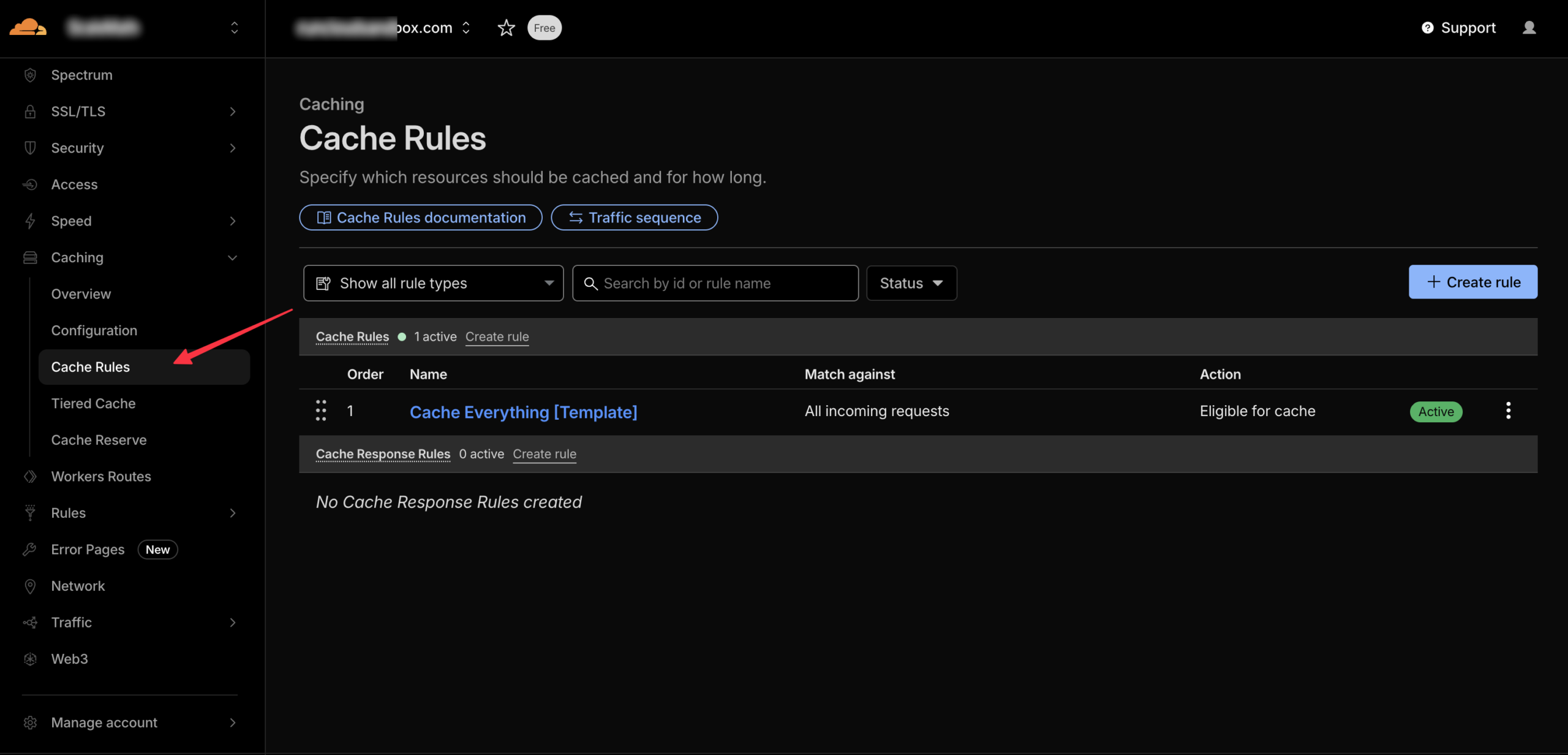
- Enter a name in the “Rule name” field, such as “Exclude LifterLMS Dashboard.”
- Under the “When incoming requests match” section, click the “Field” dropdown and select “URI Path”.
- Click the “Operator” dropdown and select “starts with”.
- In the “Value” field, type the URL slug of your dashboard page. It should look like this: /dashboard
- Scroll down to the “Cache eligibility” section and select the Bypass cache option.
- Click the Deploy button at the bottom of the page.
This ensures that Cloudflare ignores the main dashboard page and any subpages, such as individual course views or edit profile screens. You should repeat these steps for your checkout page URL as well.
Troubleshooting Caching Issues
If a student reports that they can’t log in or their course progress is not updating, you may need to clear your various caches.
- Navigate to the settings of your WordPress caching plugin (such as WP Rocket or W3 Total Cache) and click the Clear Cache button.
- Log in to your hosting provider dashboard and look for a “Clear Server Cache” or “Flush Cache” button.
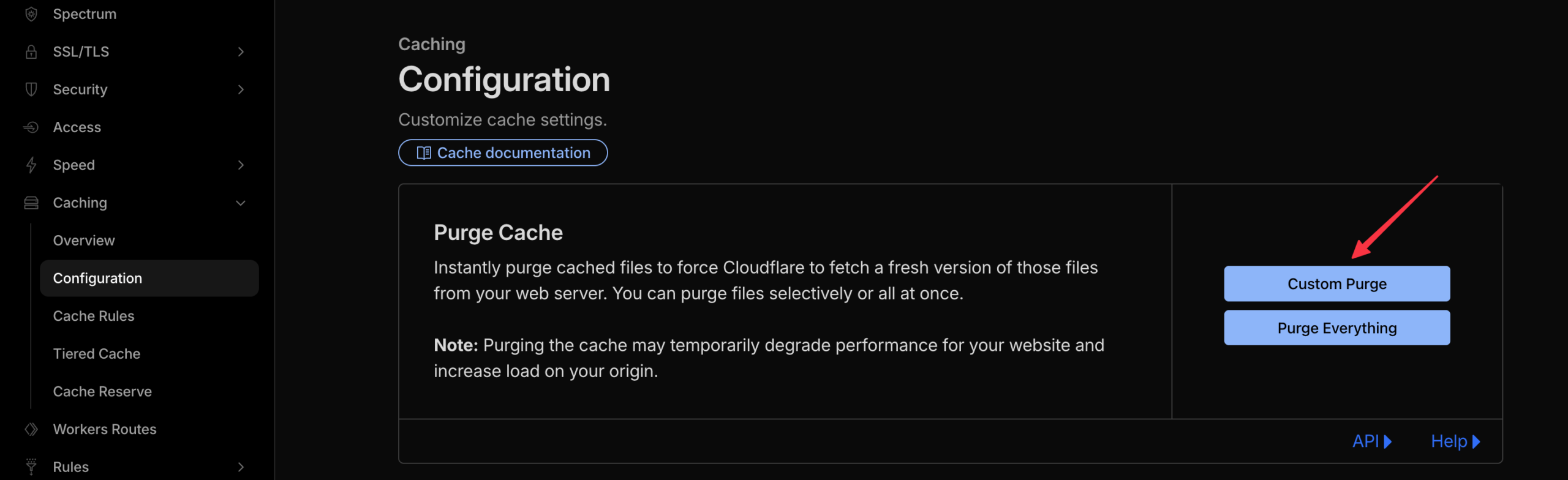
- Log in to Cloudflare and navigate to Caching > Configuration.
- Find the “Purge Cache” section and click the Purge Everything button.
- Ask the student to open your website in an “Incognito” or “Private” browser window to see if the problem is resolved.
By excluding your core LifterLMS pages from the cache, you ensure that students always see their own current progress and account information. For more detailed information on WordPress caching, you can refer to the Cloudflare WordPress documentation.
If you’re running any of these plugins:
- W3 Total Cache
- RunCache
- WP Rocket
- WP Fastest Cache
- SG Optimizer
- Jetpack
- (or any other caching plugin you’ve installed)
If you are experiencing unexpected behavior with course access, enrollments, or logins:
- Check Full-Page / CDN Caching: Verify that dynamic pages (Dashboard, Checkout, and Purchase endpoints) are excluded from full-page caches (e.g., Cloudflare, WP Rocket, hosting-level page cache).
- Flush Persistent Object Cache: If you are using persistent object caching (e.g., Object Cache Pro, Redis), purge the cache to clean the stale user session queries.
- Test in Private/Incognito Mode: Check whether the issue persists in a clean browser window to ensure local browser cache is not displaying outdated content. If the issue disappears when you bypass your caching plugin or CDN, you should review your cache rules and exclusions rather than disabling caching permanently.
Object Caching & LifterLMS
LifterLMS fully supports persistent object caching solutions, such as Redis and Memcached, using high-performance plugins such as Object Cache Pro, RunCache, or any other WordPress Redis drop-ins.
Persistent object caching significantly reduces database overhead for dynamic sites by storing the results of repeated database queries in memory. This improves the website’s performance and allows you to serve more visitors.
If your password reset screen never displays a confirmation message after entering an email address, you’re likely encountering a caching issue and should add the page to your cache exclusions.
If a newly registered student receives an “Invalid username or password” error immediately after checkout, or if their new user session is not recognized, this is caused by a stale user/session query in an object cache or database cache.
How to resolve this:
- Flush your Object Cache / Redis Cache: If you are using an object caching plugin such as Object Cache Pro or Redis Object Cache, flush the cache via the plugin settings.
- Check Cache Flushing Configurations: Ensure your object cache is properly invalidating user objects after account creation.
- Verify Database Caching Drop-ins: If you are using older database caching modules, we recommend disabling generic database query caching and replacing it with a dedicated object cache, such as Redis.
- Check Checkout Page Exclusions: Ensure your checkout and registration pages are excluded from full-page/CDN caching so account creation is processed dynamically in real time.
There may be a time when you’ve cleared your site’s cache or turned off your caching plugin, but your student is still experiencing the issue!
This is because web browsers are designed to download pages to each individual computer’s cache. As a result, users may need to clear their cache themselves.
A fast, easy way for users to do this is to force a refresh. This is done by pressing Ctrl+F5 on Windows or Command+R on Mac.
For other methods of clearing browser cache, see: Refresh your cache
If you are using WooCommerce on your WordPress site, we recommend that you also follow their cache exclusion instructions. In summary, you need to exclude the following from being cached:
- The WooCommerce Cart page.
- The WooCommerce My Account page.
- The WooCommerce Checkout page.
- The WooCommerce
_wc_session_session. - All of these WooCommerce cookies:
woocommerce_cart_hash,woocommerce_items_in_cart,wp_woocommerce_session_,woocommerce_recently_viewed,store_notice.
When you sell your LifterLMS courses and memberships using WooCommerce, the links attached to the enrollment buttons of your pricing tables just become the link of the current page being viewed, with the text ?add-to-cart= added to the end.
This text ?add-to-cart= added to the end of the URL is then followed by the post ID of the WooCommerce product linked to the course/membership being added to the cart. For example, if the post ID of the WooCommerce product is100, then the text added at the end of the URL will be ?add-to-cart=100.
Visiting any URL with ?add-to-cart=100 attached to the end of the URL will add the WooCommerce product (with post ID of 100) to the WooCommerce cart.
This ?add-to-cart= must be excluded from caching as well, as instructed in this WooCommerce help document.
LifterLMS doesn’t create a session cookie for anonymous visitors until it’s needed, such as when a visitor applies a coupon or triggers a notice. Until then, pages viewed by anonymous visitors remain eligible for full-page caching. This allows your caching system to serve those pages without bypassing the cache, which can improve site performance.
Watch this training webinar we hosted with the experts at WP Rocket to learn how to manage caching on your WordPress site.