
If you search for the best learning and development newsletters, you’ll find plenty of lists.
Most of them follow the same pattern.
A handful of well-known names, a short description of each, and a broad idea of who they’re for. Useful, up to a point. But they tend to be written with HR teams in mind, and they rarely go much deeper than surface-level summaries.
That leaves a gap.
More people working in learning are now building courses, running training businesses, or managing their own platforms. Their needs are different.
This guide takes a more deliberate approach.
Instead of treating every newsletter as interchangeable, it looks at what each one actually offers, who it’s most useful for, and where it fits.
Note: The goal isn’t to rank them, but to help you decide which ones are worth your attention.
Deep Insight and Research-Led Newsletters
Some newsletters are slower by design.
They take a single idea, test it, and follow it through properly. You won’t get a long list of links or a quick roundup of what happened that week. Instead, you get a considered argument, backed by examples, and usually something you can take away and apply.
This type of newsletter is particularly useful if you’re building courses or training programs and want to improve the quality of what you’re producing.
It’s less about keeping up and more about thinking clearly.
The trade-off is that these are not “quick reads.” You might not open every edition immediately, but the ones you do read tend to stay with you.
Dr Philippa Hardman
Dr Philippa Hardman’s newsletter is a strong example of research-led L&D content done properly. Each issue focuses on a specific problem in learning design and works through it in detail, often using structured testing rather than general opinion. In one edition, she examines AI-generated learning content by running the same inputs across multiple tools and scoring the outputs against clear criteria, rather than relying on surface impressions.
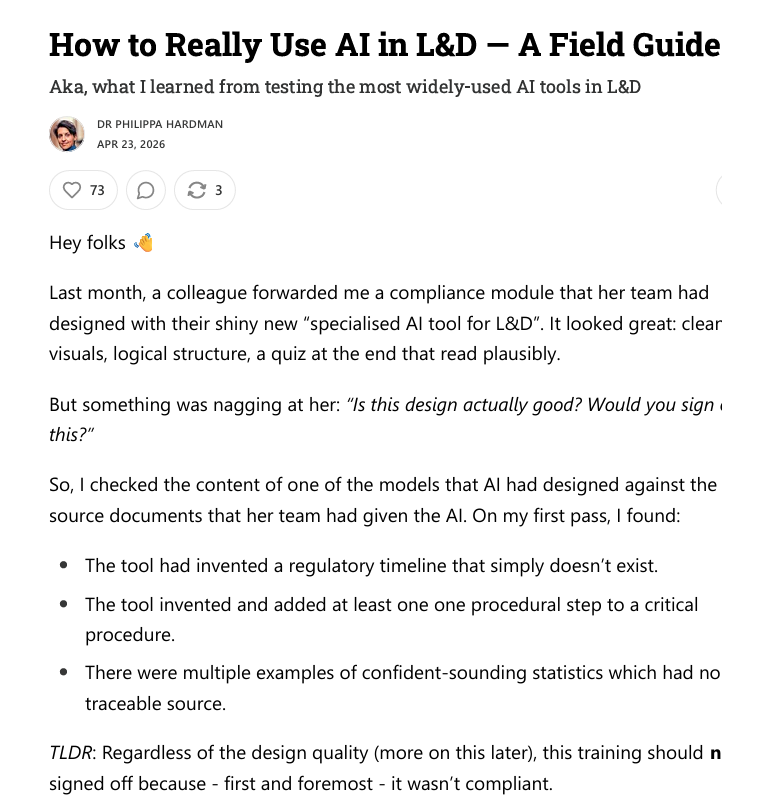
What makes this useful is the method. Instead of repeating common claims about AI, the newsletter shows exactly how those claims hold up under testing. The results are consistent: tools produce confident outputs, but they don’t question flawed tasks and often introduce inaccuracies. That makes the content look convincing while quietly missing the mark where it matters.
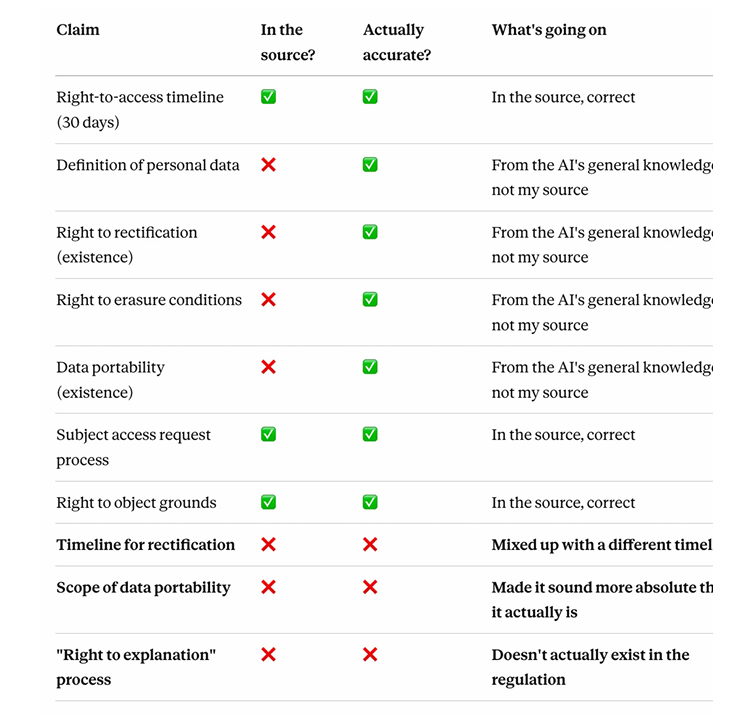
The practical value comes from what follows. Each issue introduces simple checks you can apply immediately, such as validating outputs against source material and questioning whether a course is the right solution in the first place. This makes it particularly useful for anyone designing courses or training content who wants to improve quality, not just speed. It’s less suited to quick scanning, but if you want to understand where tools break down and how to work around that, it’s one of the more useful newsletters in this space.
AI and the Future of Learning
AI has shifted the pace of change in learning quite noticeably. New tools appear, capabilities improve, and workflows evolve in a matter of months rather than years. That creates a different kind of need. It’s no longer enough to understand how learning works in theory; you also need a sense of what’s changing right now and what’s likely to matter next.
Newsletters in this category tend to sit somewhere between analysis and commentary. They move faster than research-led publications, but they still offer more than a simple list of updates. The stronger ones combine opinion, practical examples, and a clear sense of direction.
They are particularly useful if you’re trying to keep your approach current without constantly chasing every new tool or trend.
Steal These Thoughts (Ross Stevenson)
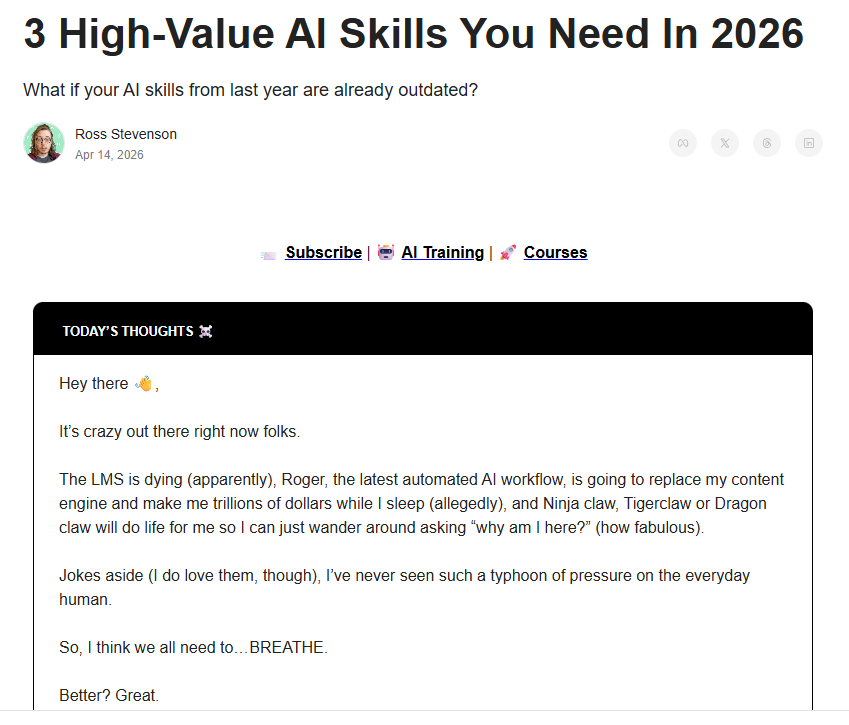
Ross Stevenson’s Steal These Thoughts newsletter is a good example of a faster-moving, AI-focused format. It has a conversational tone, but it’s built around a clear aim: helping L&D professionals and course creators make sense of rapid change. Rather than presenting fixed “best practices,” it leans into the reality that things are shifting quickly, often framing each edition around a central question, such as whether last year’s AI skills are still relevant.
Instead of listing tools, the focus is on transferable skills. A good example is the “expiring, evolving, and emerging” framework, which encourages you to review your skill set regularly and decide what to drop, update, or develop next. It’s simple, but it gives you a way to think about change without trying to keep up with everything at once.
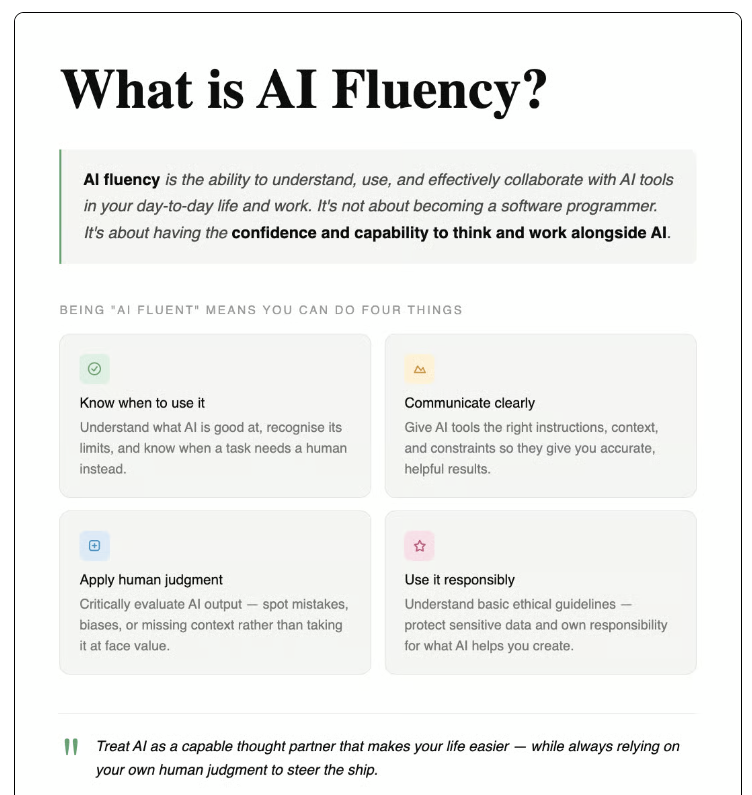
That balance is what makes it useful. It introduces new ideas and technical concepts in a way that stays practical and accessible, without becoming shallow. It’s particularly relevant if you’re actively working with learning technology or experimenting with AI in your own workflows. The trade-off is that it’s less structured than research-led newsletters, but for staying current and deciding what to pay attention to, it does its job well.
Curated Industry and L&D Updates
Sometimes the most useful thing is having someone else do the filtering.
Curated newsletters sit in that space. Their job is to scan a wide range of sources, pick out what’s worth paying attention to, and present it in a way that can be read quickly. You won’t usually get deep analysis, but you will get coverage. For busy teams, that trade-off can make sense.
This category is often the most familiar. It’s also the one most commonly featured in “top newsletter” lists, partly because it’s easy to describe and broadly applicable. The key is understanding what it does well and where it tends to fall short.
HR Dive
HR Dive is one of the more established names in this space. It focuses on human resources and workplace trends, with a dedicated section on learning and development. The format is straightforward: a series of short summaries linking out to longer articles.
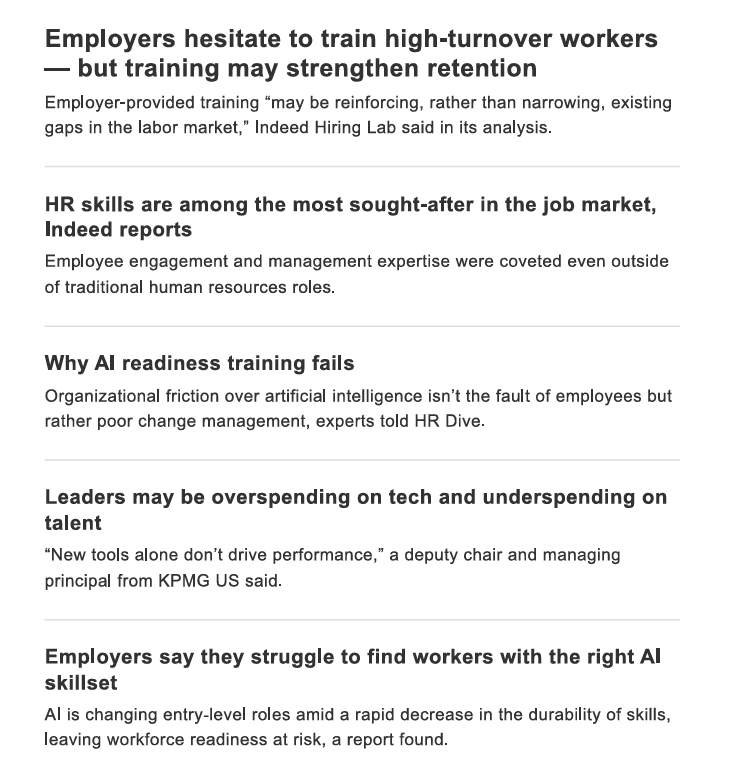
The strength here is coverage. If something is being widely discussed in HR or workplace learning, it’s likely to appear. That makes it useful as a scanning tool. You can move through an edition fairly quickly and decide which topics are worth a closer look.
For someone working in a corporate environment, that breadth can be helpful. It keeps you aware of policy changes, industry conversations, and broader trends that might affect your work.
Where it becomes less useful is when you’re looking for depth. The summaries are designed to point you elsewhere, not to replace the original content. If you rely on this type of newsletter alone, you may find yourself well-informed at a high level but lacking detail when it comes to applying ideas.
360Learning
360Learning’s newsletter takes a slightly different approach. It still includes curated content, but it often mixes in original material, such as short opinion pieces or commentary on current topics.

This hybrid format can work well. You get the benefit of curated updates, alongside a clearer sense of how the company is interpreting those trends. In some editions, that perspective is tied to practical examples, which helps bridge the gap between theory and application.
The audience here is largely corporate L&D teams, particularly those interested in collaborative learning models. That focus shapes the content. Topics tend to center on workplace learning, team development, and organizational change.
As with other curated newsletters, the limitation is that depth varies. Some sections provide useful context, while others act more as pointers to external sources. It’s a useful starting point, but you’ll often need to follow links to get the full picture.
Learning News
Learning News is another example of a curated, industry-focused newsletter with a slightly more global, event-driven perspective. It brings together updates from across the learning technology and training sectors, including product announcements, partnerships, and conference coverage.
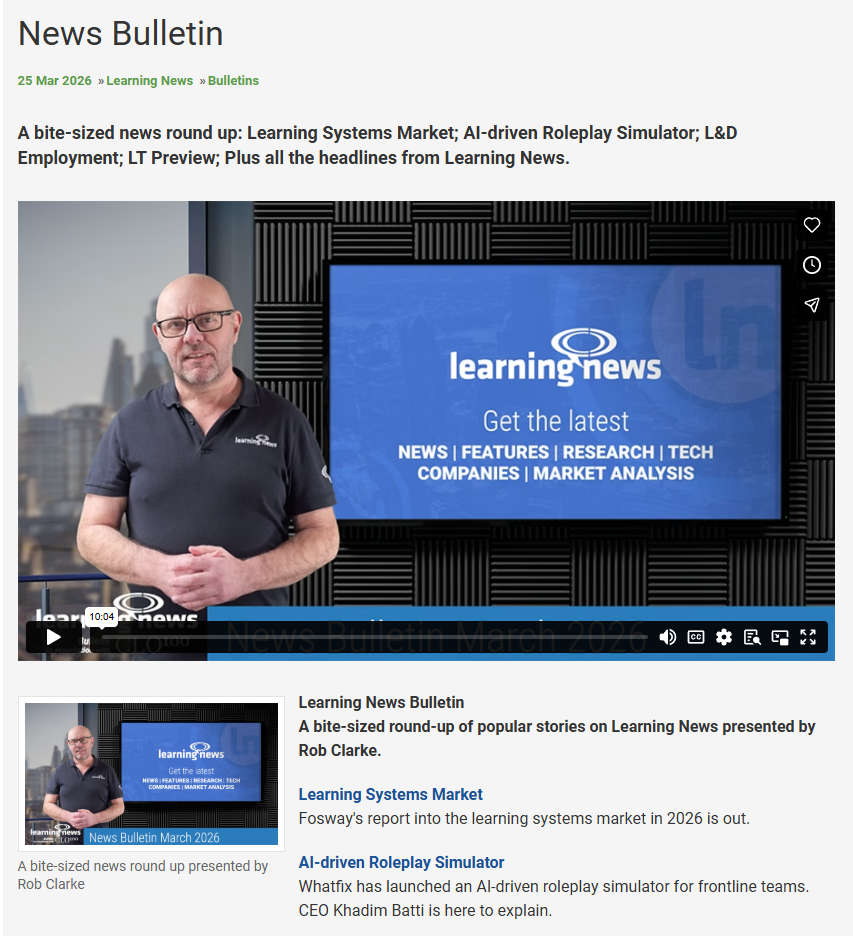
This makes it particularly relevant if you’re interested in the wider ecosystem. It’s less about day-to-day course design and more about what’s happening across the industry as a whole. That includes vendors, platforms, and major developments that shape the market.
For training providers and organizations working at scale, this broader view can be useful. It helps you see where things are heading and which companies or ideas are gaining traction.
The trade-off is similar to other newsletters in this category. You get a wide view, but not a deep one. The content is designed to inform rather than analyze, so it works best when paired with more detailed material.
Creator, Educator, and Course Business Newsletters
A growing share of people working in learning are not operating inside corporate teams. They’re building courses, running membership sites, delivering training to clients, or developing their own education businesses. Their challenges are different. They’re not just thinking about instructional design or industry trends; they’re thinking about pricing, positioning, delivery, tools, and long-term sustainability.
Newsletters in this category tend to reflect that.
They are closer to the day-to-day reality of building something. You’ll see more focus on implementation, more discussion of real use cases, and a stronger link between learning design and business decisions.
LifterLMS Newsletter
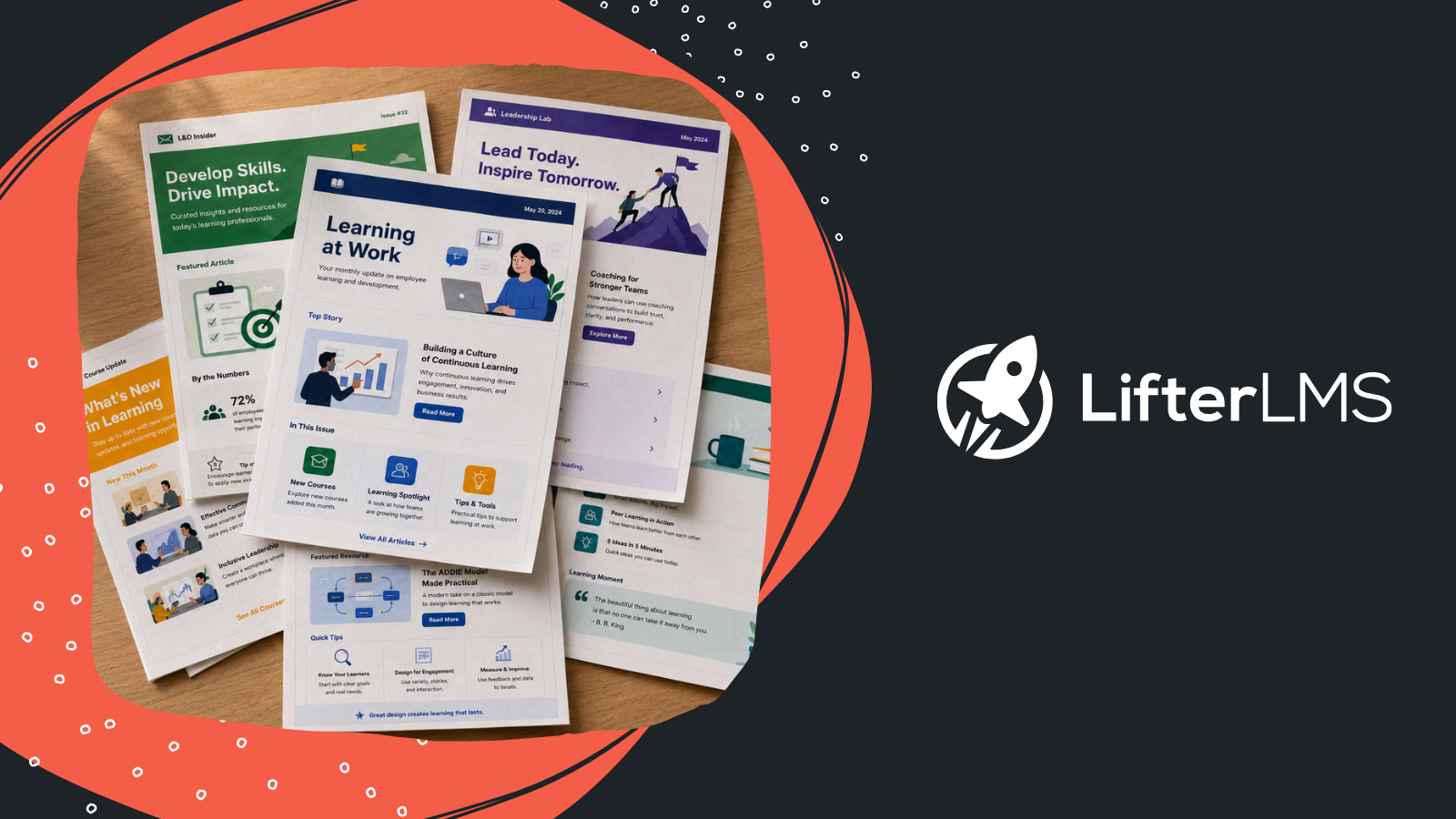
The LifterLMS newsletter has long been a useful resource for course creators, membership site owners, coaches, and training businesses building online learning platforms with WordPress.
Its newer weekly format makes it more useful.
Rather than sending an occasional product-heavy update, the newsletter now brings together timely ideas, practical guidance, creator-focused examples, and curated learning-business resources in a more regular, easier-to-follow format.
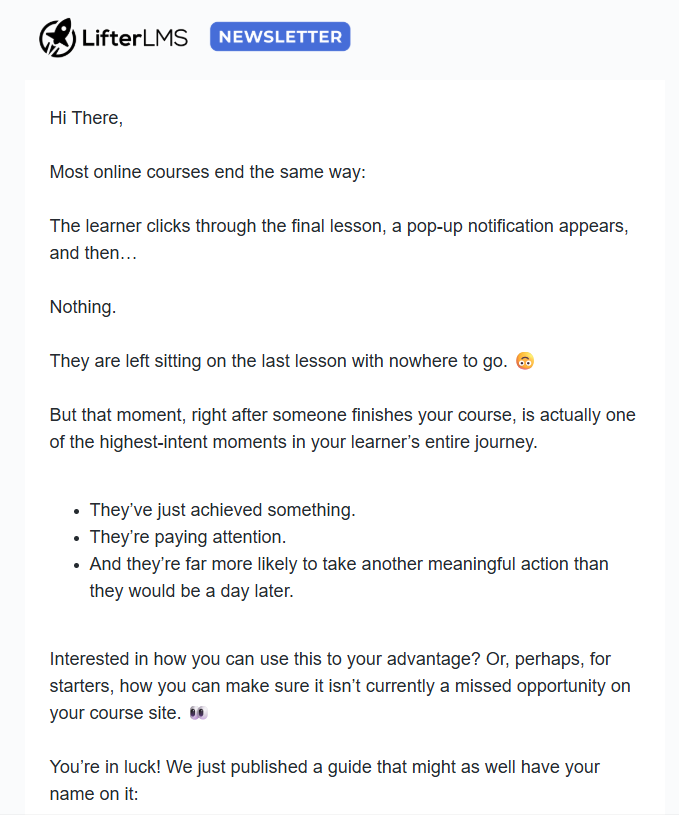
Each edition is designed to help online educators think more clearly about their next move – whether that means improving course completion, increasing sales, refining the learner experience, or making better use of the tools already available to them.
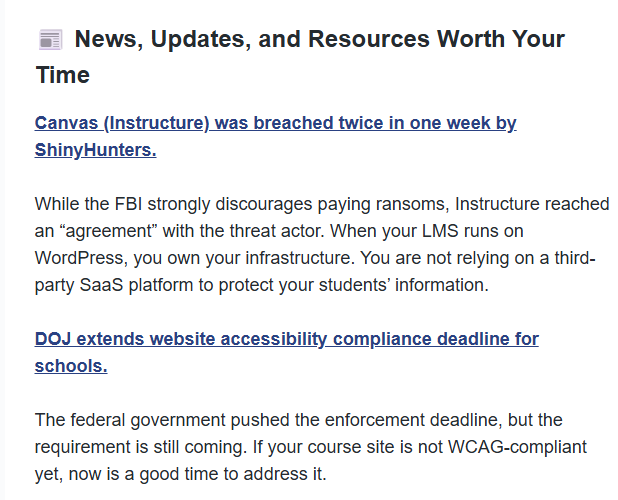
A typical issue may include:
- Practical course growth ideas
- LifterLMS tips and feature guidance
- Useful articles, podcast episodes, and tutorials
- Examples from successful course creators
- Relevant news from online learning, AI, and the creator economy
- Prompts and questions to help readers apply the ideas to their own sites
That mix is what makes it useful. It’s not trying to be a general L&D digest. It is written for people actively building, selling, and improving online courses. The focus stays close to the decisions course creators actually face: what to build, what to improve, what to promote, and how to create a better experience for learners.
The limitation is that it comes from LifterLMS, so some sections naturally connect back to the platform. But for readers using LifterLMS, considering it, or building a WordPress-based learning business, that connection is part of the value.
It gives you strategy, examples, and practical next steps in the same place.
You can subscribe to the LifterLMS newsletter here.

HowNow
HowNow’s newsletter takes a slightly different approach, but still sits within this broader category. It focuses on workplace learning and skills development, often emphasizing modern learning practices and the role of technology.
The structure typically combines a central theme with supporting content, such as articles, insights, and links to additional resources. Compared to more traditional curated newsletters, there is usually a clearer narrative running through each edition.
That makes it easier to follow. Instead of moving through unrelated updates, you’re guided through a specific topic or idea, with supporting material that builds on it.
The audience here leans more towards L&D teams within organizations, but the content often overlaps with the needs of independent creators, particularly those interested in skills-based learning and modern delivery methods.
The strength of this approach is clarity. Each edition tends to feel more focused, which makes it easier to take something away from it. The limitation is that it doesn’t always go as deep as research-led newsletters, so it works best as a bridge between curated updates and more detailed analysis.
Offbeat
Offbeat stands out for its tone and presentation. It takes a more editorial approach, often leaning into opinion, commentary, and design in a way that feels closer to a magazine than a traditional newsletter.
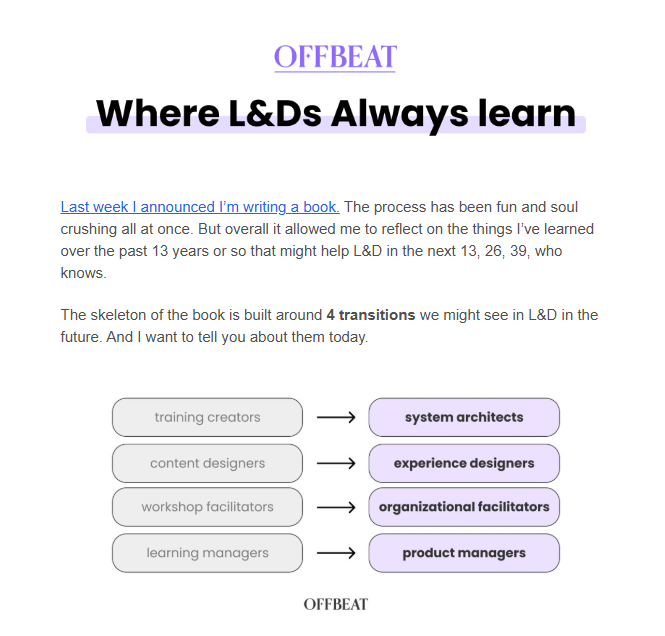
The content itself tends to explore broader questions around learning, work, and technology, often with a critical or reflective angle. This makes it different from more practical or tool-focused newsletters.
For readers, that can be refreshing. It introduces ideas that don’t always appear in more conventional L&D content and encourages a slightly different way of thinking about the space.
The trade-off is that it’s less directly actionable. You’re less likely to come away with a specific framework or step-by-step approach. Instead, the value comes from perspective and exposure to different viewpoints.
This makes it a useful complement to more practical newsletters, rather than a replacement for them.
Roundtable Learning
Roundtable Learning’s newsletter sits closer to the corporate training end of this category, but still focuses on practical application. It often highlights case studies, learning strategies, and examples of how organizations are approaching training.
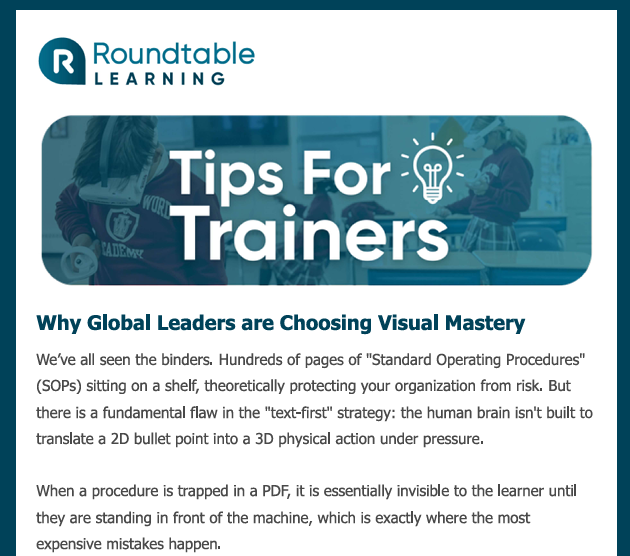
The emphasis here is on real-world implementation. Rather than discussing ideas in isolation, the content shows how they are applied in practice. For training providers and organizations, that can be particularly useful.
It also provides a bridge between corporate L&D and independent course creation. While the context is often organizational, many of the underlying principles carry across.
As with other newsletters tied to a company, the limitation is that it reflects a particular perspective. That isn’t necessarily a problem, but it’s worth noting when comparing it to more independent sources.
How to Choose the Right Newsletter – and Where LifterLMS Fits
By this point, it should be clear that there isn’t a single “best” newsletter.
What works depends on what you’re trying to do.
If you’re building courses, refining your delivery, or trying to keep pace with changes in tools and expectations, different types of newsletters will be useful at different times. The aim isn’t to find one that does everything, but to combine a small number that complement each other.
Choosing Based on What You Need
A simple way to approach this is to start with your immediate goal.
If you want to improve how you design and deliver learning, the research-led newsletters tend to be the most useful. They take more time to read, but they also have a longer shelf life. You’re more likely to come back to them when you’re reworking a course or evaluating how something performed.
If your focus is on staying current, particularly with AI and learning technology, then the faster-moving, opinion-led newsletters are a better fit. They won’t give you the same level of depth, but they help you understand what’s changing and where to pay attention.
Curated newsletters sit in a different role again. They’re useful when you don’t have time to track multiple sources yourself and simply want to know what’s happening across the industry. They tend to work best as a layer on top, rather than a replacement for something more detailed.
Then there are the creator and business-focused newsletters. These are the ones that connect learning with implementation. If you’re actively building or running a course-based offering, this is where you’re more likely to find ideas you can apply directly, whether that’s around platform setup, content structure, or how to position what you’re offering.
Where LifterLMS Fits
Most newsletters tend to sit quite clearly within a single category.
Some are purely curated. Some are focused on analysis. Others are built around a specific perspective or topic.
The LifterLMS newsletter occupies a slightly different position.
It sits closest to the creator and course business category, but it also pulls in elements from the others. Alongside product updates, it includes practical resources, case studies, podcast episodes, and links to tools that are directly relevant to building and running a learning platform.
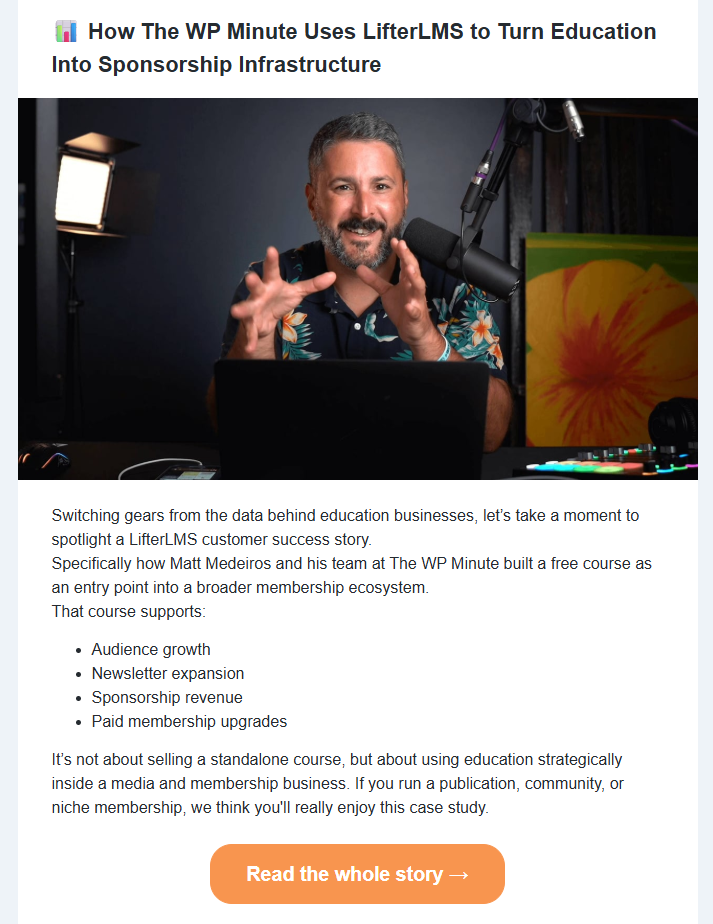
That combination reflects how people actually work. Building a course or training business rarely falls neatly into a single category. It involves design decisions, technical setup, ongoing optimization, and awareness of broader changes.
By bringing those elements together, the newsletter becomes less about a single topic and more about the process of building and improving a learning business over time.
That doesn’t mean it replaces the other types. It works best as part of a wider mix, particularly alongside something more research-led or more focused on AI. But it does fill a role that isn’t always covered elsewhere, especially for people working outside traditional corporate L&D structures.
Bringing It All Together
The right newsletter depends on what you’re trying to improve.
If you want deeper thinking around learning design, choose something research-led. If you want to keep an eye on AI, tools, and industry shifts, add something faster-moving. If you’re building or running online courses, make sure at least one newsletter speaks directly to that work.
That last point matters.
Course creators, coaches, trainers, and membership site owners aren’t just reading about learning in theory. They’re making practical decisions every week: what to build next, how to improve completion, how to support learners, how to sell more effectively, and how to make their platform work better.
That is where the LifterLMS newsletter fits.
The LifterLMS newsletter brings together course-building ideas, practical WordPress guidance, creator examples, useful resources, and learning business insights in one place. It’s written for people who are actively building and improving online learning sites, not just for L&D professionals following from the sidelines.
So, by all means, build a short list of newsletters that give you depth, industry awareness, and fresh thinking.
But if your work involves creating, selling, or improving online courses with WordPress, the LifterLMS newsletter is the one worth adding to that list.