
How MDR Training Reached Nearly 5,000 Students and an 86% Exam Pass Rate
Richard Dunbavand moved MDR Training’s transport management courses online during COVID-19 and built the LifterLMS portal himself. It now has nearly 5,000 students. Watch his LMScast interview, or read the full story below.

Richard Dunbavand – Training Manager
MDR Training
When COVID-19 shut down classrooms across the UK, MDR Training had a problem. Its business depended on teaching transport professionals face-to-face, and suddenly nobody could come to class.
Richard Dunbavand had no experience with WordPress or learning management systems. But he knew they needed another way to teach.
So he started building.
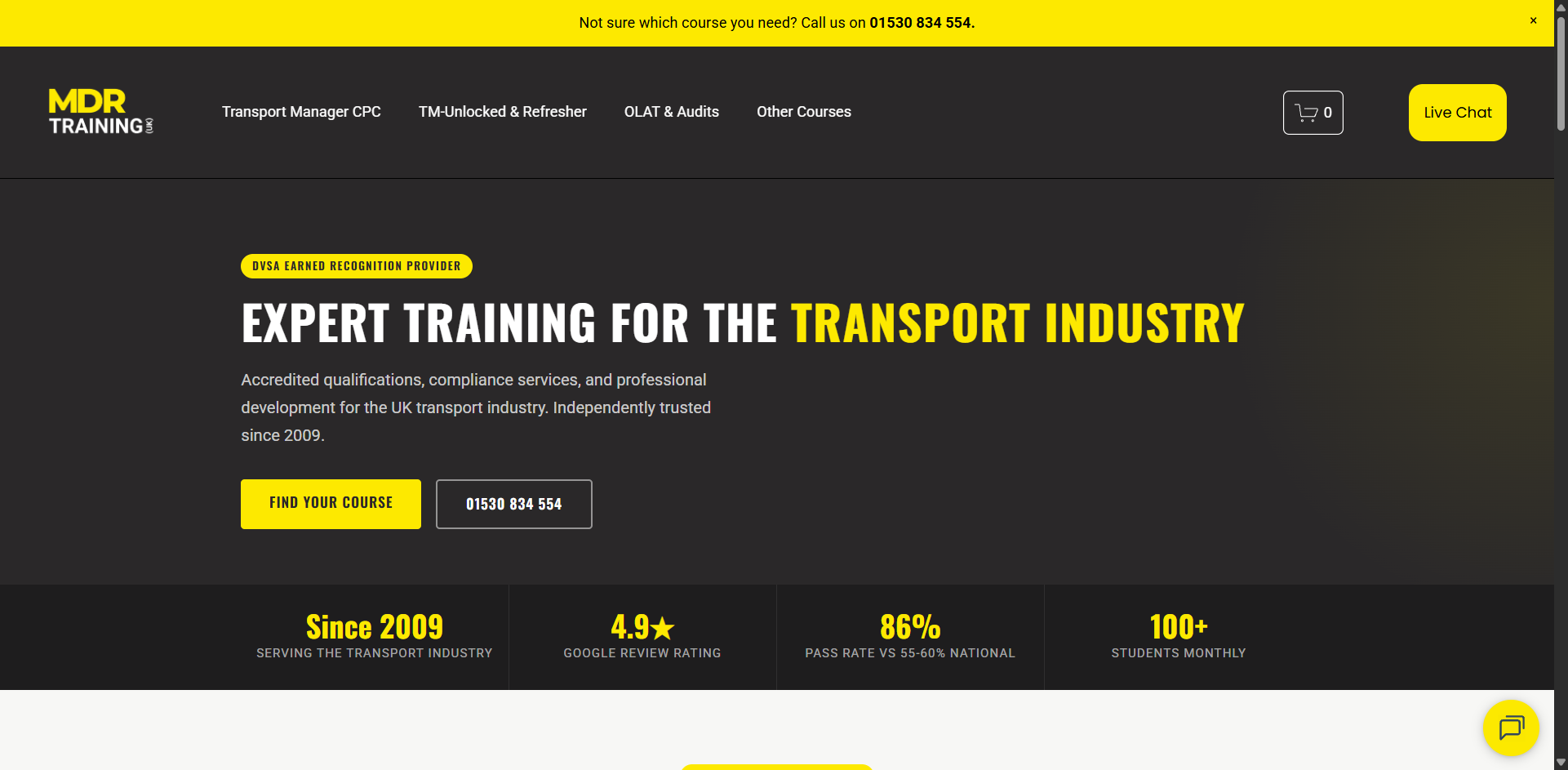
By September 2026, MDR Training had nearly 5,000 students registered on its LifterLMS-powered portal, according to Richard, with another 200–300 joining each month. He estimates that the business served 15–20% of the UK transport management training market.
And there’s another number he’s particularly proud of: an 86% first-time exam pass rate for students taking MDR’s classroom and live online courses, compared with 25–30% for those studying independently.
Here’s how MDR Training moved online, built a training business that reaches well beyond the UK, and discovered why giving students the right support matters just as much as delivering the lessons.
Success Story Highlights
- Nearly 5,000 students: Registered on MDR’s LifterLMS training portal as of September 2026, with 200–300 more joining each month.
- 86% first-time pass rate: For the Transport Manager CPC classroom and live online courses, from MDR’s published results for 2025–26.
- 150 students a month: Taught through live online sessions, where MDR once ran a classroom course for around 10 students a quarter.
- 15–20% of the UK market: Richard’s estimate of MDR’s share of transport management training, delivered through a compliance LMS he built himself.
From Recruiting Drivers to Training Transport Managers
MDR originally stood for Midlands Driver Recruitment. The company started as a recruitment agency, supplying drivers to businesses across the UK.
When new driver training requirements came into force, the team spotted an opportunity. They were already working with drivers, so why not help them get the training they needed?
The business began delivering courses in hired classrooms, village halls, and other available spaces. Eventually, a customer asked whether MDR could provide transport management training too. Richard said yes.
There was just one problem. They didn’t have a course yet.
Within three months, the team put together the course, secured the necessary approvals, and welcomed its first three students.
Two passed. That gave MDR a 67% pass rate on its first course, although three students were far too few to draw meaningful comparisons. Richard recalls the national average being around 40% at the time.
Transport management training soon became a major part of the business.
Today, MDR Training is a CILT-accredited training center offering courses covering the qualifications and compliance requirements that transport managers, drivers, and business owners need to operate legally in the UK.
Its flagship course is the Transport Manager Certificate of Professional Competence (CPC), a Level 3 qualification covering everything from vehicle operations and drivers’ hours to financial management and transport legislation.
It’s a demanding course. Richard compares the academic level to an A level, and many students are returning to formal education after decades away.
He says the average learner is around 40 years old. Some haven’t studied for years, and others aren’t particularly comfortable using computers.
MDR needed a way to support those students without expecting them to become technology experts first.
When the Classrooms Closed, MDR Had to Find Another Way
Before COVID-19, MDR’s reach was limited by geography.
Students generally had to live within an hour or two of a training venue. Every course needed a physical room, a trainer, and enough students to make it worthwhile. There was only so much room to grow.
Then the pandemic arrived, and classroom training stopped.
Richard and his colleague Kevin had to decide what to do next. With their normal business effectively on hold, they put together an online course using a basic system they had assembled themselves.
It was a start, but they needed something better.
One of MDR’s trainers, Brad, came across a LifterLMS video on YouTube and suggested taking a look. Richard signed up for a trial.
His first reaction wasn’t particularly encouraging. He knew how to use website builders such as Wix and Squarespace, but he’d never worked with WordPress plugins or an LMS. The WordPress dashboard was unfamiliar, the options seemed endless, and he wasn’t quite sure where to begin.
Rather than hand the project to an outside developer, Richard taught himself. He watched tutorials, read documentation, experimented with different settings, and made plenty of mistakes. He even accidentally deleted courses and lost quizzes along the way.
After roughly three months, MDR had a working course with lessons, quizzes, assignments, and a process for tutors to review student work.
And Richard discovered he rather enjoyed building websites.
He still manages the LifterLMS platform himself, while MDR’s trainers handle the teaching.
Why MDR Didn’t Simply Record Its Classroom Lessons
Moving a training business online can be as simple as recording a presentation and asking students to watch it. But MDR’s courses prepare people for formal examinations. Watching lessons isn’t enough.
Students need to practice applying what they’ve learned, especially when their final assessment involves working through complicated transport scenarios or producing written answers.
So MDR built its online training around the same teaching process that worked in the classroom.
Students can attend lessons in person, join live sessions over Zoom, or study independently with varying levels of tutor support. They then work through practice questions and assignments.
For its tutor-supported courses, MDR uses LifterLMS to manage much of that assessment and feedback process.
Multiple-Choice Quizzes Give Students Immediate Feedback
MDR uses LifterLMS quizzes to help students prepare for their exams. Students complete multiple-choice questions and receive automatically marked results, showing them what they got right and where they need more work.
They can practice whenever they have a spare few minutes, including on a mobile phone. Richard likes the idea of someone using their lunch break to work through a few questions. For adult learners juggling work, study, and family commitments, those short opportunities to revise can be useful.
And because the quizzes mark themselves, MDR’s trainers can spend more time helping students with work that needs individual attention.
Written Assignments Prepare Students for the Real Exam
Some transport management questions need more than a multiple-choice answer. A student might be asked to plan a driver’s working schedule or explain how they would handle a particular operational problem. MDR uses written assignments in LifterLMS to recreate these scenarios.
Richard designs the questions to resemble the actual exam format as closely as possible. Students type their responses into the portal, then submit them for assessment. A tutor reads the work, grades it, and provides feedback. If the student hasn’t understood something, the tutor can ask them to try again.
This is particularly important with written work, where two students might arrive at the same correct answer in very different ways.
An automated score can’t always tell you whether someone understands the reasoning behind their answer. A good tutor can.
Tutors Can See Who Needs Help
MDR’s trainers also use LifterLMS reporting to monitor student progress. They can see who’s working through their lessons, who’s completing assignments, and who’s falling behind.
When students submit written work, tutors receive email notifications that take them to the relevant submission. From there, they can mark the assignment and provide feedback.
Richard says trainers can arrive on a Monday morning to several hundred submissions waiting for review. Without a central system to manage that work, keeping track of individual students would be much harder.
But reporting does more than help tutors handle assignments. It gives them the information they need to step in when someone is struggling.
A student who has completed only a small part of the course might need a reminder. Someone repeatedly getting a particular type of question wrong might benefit from extra teaching. Others are progressing well and can be left to work at their own pace.
That’s especially helpful when teaching adults with very different educational backgrounds.
The Difference Tutor Support Makes: 86% Versus 25–30%
One of the clearest measures of MDR Training’s success is the difference in exam results between students who receive tutor support and those who study independently.
MDR offers four ways to study for the Transport Manager CPC qualification, ranging from classroom tuition to independent home study. And the pass rates tell an interesting story.
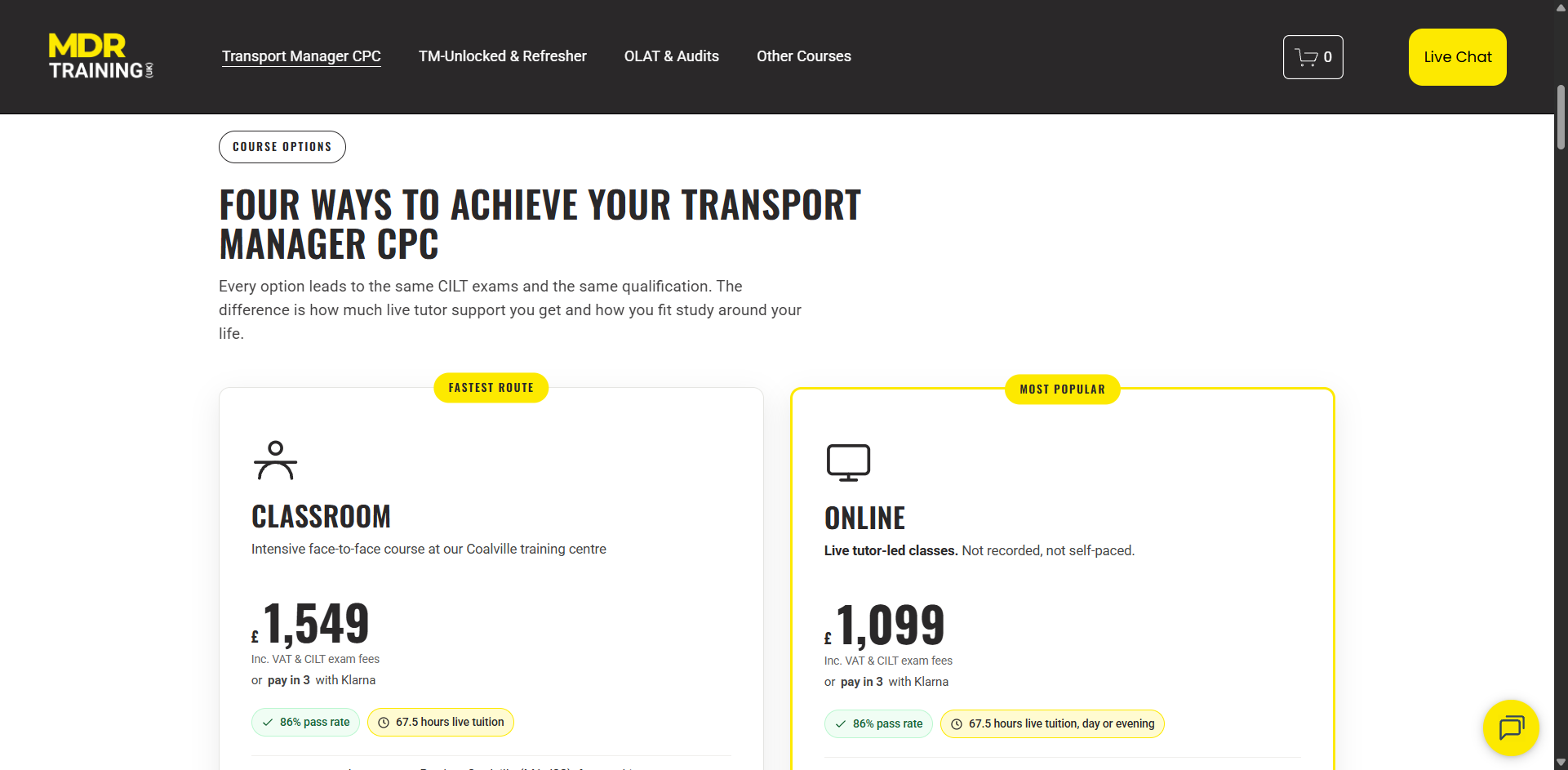
Its classroom and live online courses include direct teaching and feedback on written assignments. Both have an 86% first-time pass rate, according to MDR’s published results for 2025–26.
Students who prefer to work at their own pace can choose distance learning, which includes tutor-marked assignments and exam preparation support. That option has a reported pass rate of 60–65%.
The lowest-cost option is home study, in which learners work independently with course materials and practice papers. Its first-time pass rate is 25–30%.
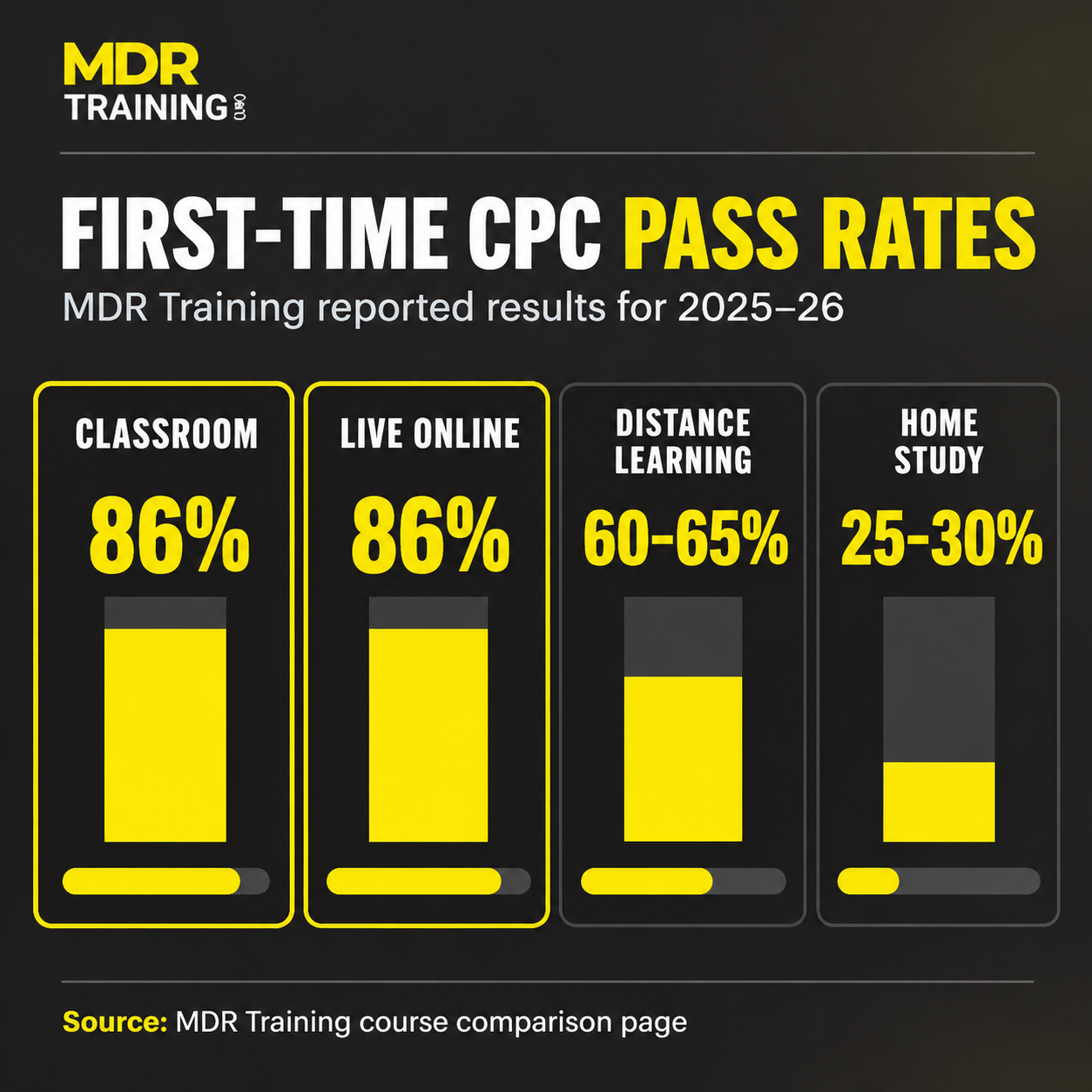
The difference is striking, although the figures don’t prove that tutor support alone accounts for the higher pass rates. Students choosing each course format may have different levels of experience, preparation, and motivation.
Richard sees practical work and regular feedback as a major part of MDR’s success. With independent study, students may not discover what they’ve misunderstood until they sit the actual exam. With tutor support, those gaps can be identified earlier.
LifterLMS helps MDR deliver that support by keeping quizzes, assignments, feedback, and progress reporting together in the learning portal.
The technology doesn’t replace the tutor. It gives the tutor a better way to support each student. And for some learners, passing the qualification is essential to their livelihood.
As Richard explains:
“If these people don’t pass this, their business is gone. They can’t operate without it.”
Richard Dunbavand, MDR Training
For those students, gaining the qualification can mean protecting their job or keeping their business running. That’s what makes the work rewarding for Richard and his team.
From Small Classrooms to 150 Students a Month
Before moving online, MDR might run a classroom course for around 10 students once a quarter.
MDR now teaches around 150 people a month through online sessions, with approximately 150–160 students sitting their exams each month. That’s a considerable change from the days of hiring a room for a handful of students.
And MDR hasn’t abandoned classroom training. It still provides face-to-face courses, including small-group tuition at its Coalville training center.
The difference is that students no longer need to live near a particular training venue to take part.
MDR’s online courses now reach students well beyond the UK, including learners in Nepal, people working on projects in Saudi Arabia, and students from across Europe. For a specialist training provider that once depended on filling local classrooms, that’s a significant change.
The move online has also changed the size of the business.
After operating with a team of three for around 12 years, MDR has grown to include six trainers and administrative staff who handle course materials, accounts, and other responsibilities.
Richard says the company has been taking on one or two additional staff members each year as demand increases.
More students mean more work, of course. But the online model allows MDR to teach larger groups without having to find bigger classrooms or additional physical training venues.
Building a Training Portal Without Becoming a Developer
One of the more unusual parts of MDR’s story is that Richard has built and maintained the learning platform himself.
He’s quick to describe himself as a salesman rather than a technical expert. And he doesn’t teach the courses. His job is to build and improve the system that the trainers use.
LifterLMS gave him the foundation for the training portal, but he has continued adding features as the business has grown.
A Site That Looks and Feels Like MDR
Richard found the introduction of the LifterLMS Sky Pilot theme particularly helpful.
As he became more familiar with WordPress, Sky Pilot made it easier for him to create a site that looked the way he wanted and matched MDR’s branding.
He also learned how to control what other people could access within WordPress.
MDR’s trainers have instructor-level access, allowing them to work with the students and assignments they need without having to deal with the entire website.
Richard has even provided a white-labeled version of the platform for another training company, teaching its instructors how to review assignments and monitor student progress.
He estimates that it took around two hours to get those trainers comfortable with their main tasks.
That arrangement lasted several months before the other company stopped using it, but it demonstrated how easily Richard could adapt the platform for another team.
Course Cohorts Keep Different Student Groups Organized
MDR uses the LifterLMS Course Cohorts add-on to manage recurring courses.
Richard starts with a master course, then creates a separate cohort for each new intake. This gives each group its own course environment while retaining the underlying lessons and assessments. For a business running regular training programs throughout the year, that’s particularly useful.
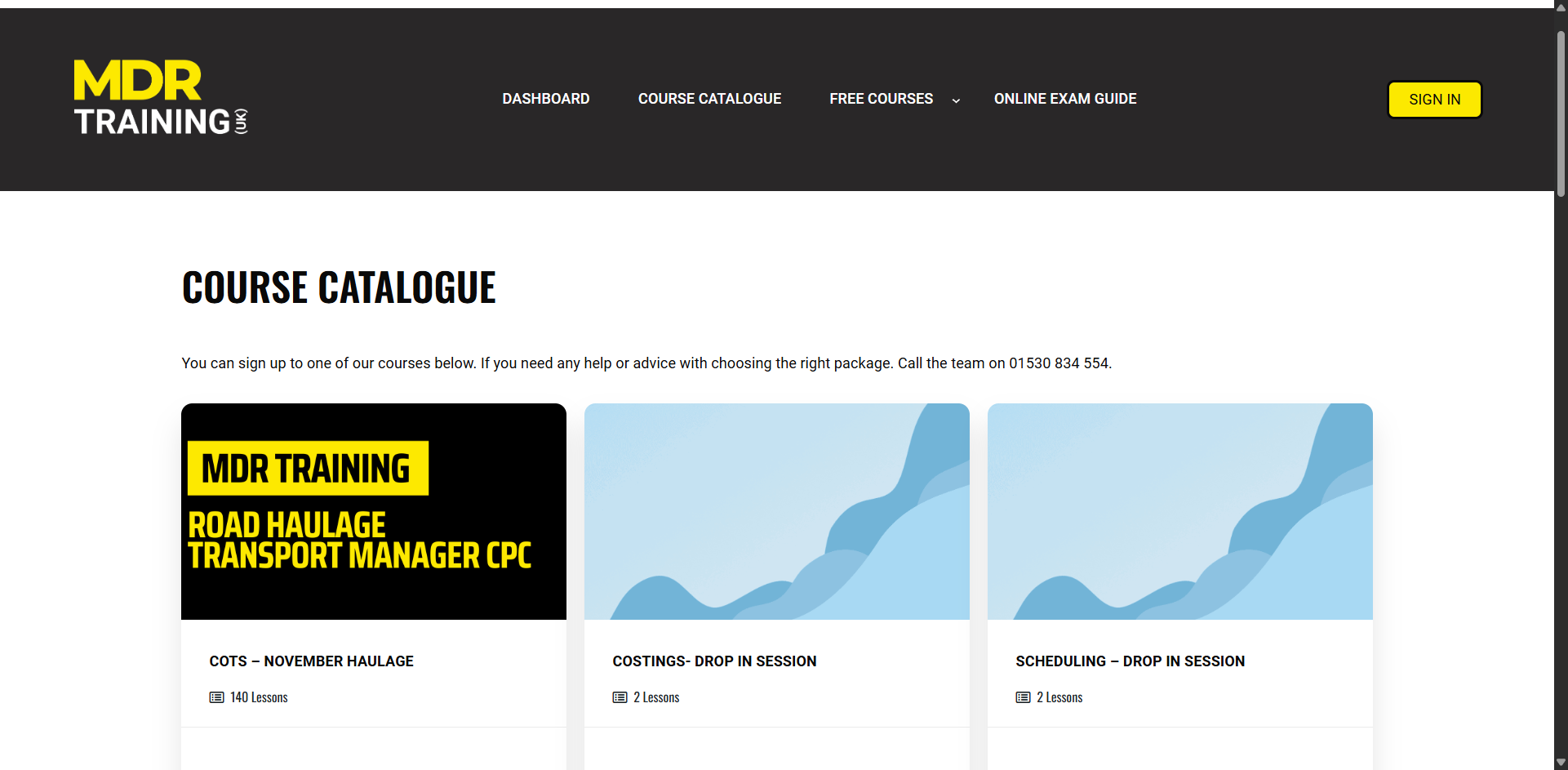
Students can be assigned to the right intake, and tutors can monitor each group without confusing their work with that of students on another course.
Richard considers Course Cohorts one of the most important additions to MDR’s setup.
Certificates, Audio Lessons, and Revision Resources
For shorter courses, MDR uses LifterLMS certificates to provide students with proof of completion. Once a learner finishes the required work, they can download their certificate directly from the portal.
MDR also provides audio revision materials, allowing students to revisit course topics away from their computers. Richard particularly likes that someone can attend a live teaching session, then listen to the material again while traveling.
MDR’s current Transport Manager CPC courses also include a full audio revision library and module-specific flashcards, giving learners more ways to prepare between sessions. The audio library covers 24 modules for Road Haulage and 26 for Passenger Transport.
Students can work through the material in whichever way suits them, rather than having to sit at a desk every time they want to revise.
Custom Features Where They’re Needed
Richard has also built tools around the standard LifterLMS features. For example, he created a separate plugin to replicate the experience of completing an online examination paper.
Other additions help connect student activity with MDR’s existing business systems and notification processes.
He uses Claude to assist with some of this development, describing how it helps him create features that would otherwise require outside developers or programming skills he doesn’t yet have.
But Richard draws a distinction between using AI for technical development and using it to create training material. He doesn’t currently rely on Claude for course creation because the team needs to bring its own subject knowledge to that work.
And he hasn’t needed to rebuild or replace the core LifterLMS functionality to support his additions. He’s been able to keep the main learning system intact while creating extra tools around it.
What MDR Training Learned About Moving Online
Richard’s advice to other classroom training providers is straightforward: get started.
“Just do it. It’s as simple as that. Don’t sit on your hands.”
Richard Dunbavand, MDR Training
He doesn’t pretend that building the portal was easy from day one. Learning WordPress took time. There were mistakes, frustrating moments, and plenty of occasions when he wasn’t sure what to do next.
But MDR didn’t wait until everything was perfect.
The team started with a basic online course because they had to. Then they improved it as they learned what worked.
Richard also points to LifterLMS tutorials, YouTube videos, and Feature Friday sessions as resources that helped him whenever he got stuck.
And he’s a good example of someone who’s become comfortable working with technology by getting involved and figuring things out along the way.
The lesson from MDR’s experience isn’t that every training provider needs to become a software developer. It’s that you can start with a course, learn the system, and build something more substantial as your business develops.
For regulated training businesses, there’s another consideration. MDR already had the approvals it needed to provide transport management training. Richard encourages anyone entering a regulated training market to speak with the relevant awarding and regulatory bodies early, rather than assuming the approval process will be impossible.
In MDR’s case, that includes organizations such as the Chartered Institute of Logistics and Transport (CILT) and the Driver and Vehicle Standards Agency (DVSA), depending on the training being offered.
Those requirements matter just as much online as they do in a classroom.
Nearly 5,000 Students, and Still Growing
MDR Training has come a long way from hiring village halls and teaching small groups of drivers.
MDR Training has grown to nearly 5,000 registered students on its LifterLMS portal, with an estimated 15–20% share of the UK transport management training market.
It’s a remarkable change for a business that once depended on filling small classrooms with students from the surrounding area.
MDR now supports a growing team of trainers, runs regular online and classroom courses, and reaches learners well beyond its original local audience.
The company keeps expanding its range of courses, improving its assessments, and finding new ways to help students prepare for their qualifications.
But the most important part of MDR’s approach hasn’t changed. Students still need good teaching. They still need practice. And when they make mistakes, they need someone who can help them understand what went wrong. LifterLMS has helped MDR bring that process online and make it available to far more people.
Richard credits LifterLMS with playing a major role in MDR’s growth, helping the business reach more students, support its trainers, and build a training platform that can grow alongside the company.
For a business that once depended entirely on filling physical classrooms, that’s quite a change.
Build Your Own Online Training Business With LifterLMS
MDR Training shows what’s possible when you combine subject expertise, practical assessments, and personal support with an online learning platform.
Whether you’re moving existing classroom courses online or building a new training business, LifterLMS gives you the tools to create courses, assess students, review their progress, and award certificates from your WordPress website.