
How Dr. Scott Built an Online Science School for Homeschooling Families
A former college chemistry professor, a remote beach in Mexico, and an unexpected phone call. That’s how Dr. Scott Beaver’s online teaching business began.
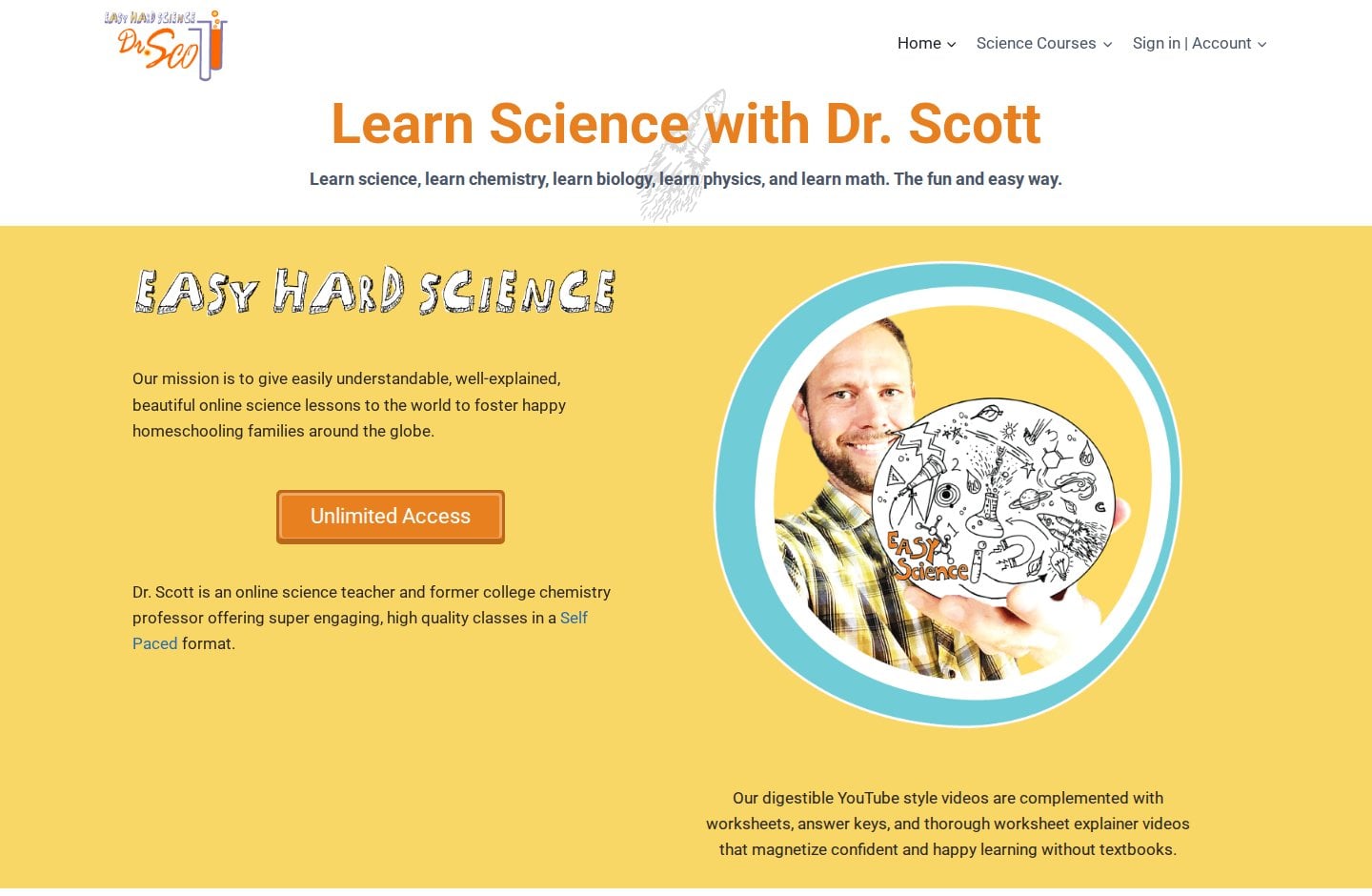
What started with individual tutoring sessions grew into Learn with Dr. Scott, an online school offering courses in chemistry, biology, physics, and math for homeschooling families and students preparing for college.
Scott uses WordPress and LifterLMS to run his business, giving him control over his courses, pricing, and teaching methods. Students can work through lessons at their own pace, while parents get access to structured science courses without having to teach complex subjects themselves.

Dr. Scott Beaver
Founder
Learn with Dr. Scott
Listen to Dr. Scott’s full interview on LMScast
Over the years, Scott has taught students around the world, tried different course formats, and settled on a business model that gives families a choice between affordable self-paced learning and courses with personal teacher support.
And he has learned plenty about what it takes to turn teaching experience into a successful online business.
Success Story Highlights
- About 1,000 students: Scott’s student numbers rose to approximately 1,000 during the COVID-19 pandemic, with learners joining from English-speaking countries around the world.
- $20 monthly membership: Unlimited access to every self-paced science and math course, without individual teacher support.
- $300 to $400 supported courses: A one-time purchase with lifetime access, personal grading, and questions by email and Zoom.
- Using LifterLMS since 2019: Scott began building his WordPress learning platform in December 2019.
From College Chemistry Professor to Online Teacher
Scott spent years teaching chemistry in traditional college classrooms. Then, around 2016, he took some time off on a remote beach in Mexico.
That’s when a parent contacted him with an unusual request: could he tutor their child over the telephone?
Scott had never taught that way before, but he agreed to give it a try.
The lesson went well, and it got him thinking. If he could teach someone over the phone while traveling, why couldn’t he run classes online?
He started using Zoom to teach students remotely, gradually building up a customer base. It meant he could continue teaching chemistry without being tied to a particular classroom or location.
But as the number of students grew, so did the administrative work.
Scott was spending more and more time sending videos and worksheets, checking emails, and managing course files. He enjoyed teaching, but keeping everything organized was becoming a job in itself.
He needed a better way to deliver his lessons and materials, so he started looking into learning management systems.
Why Scott Chose WordPress and LifterLMS
Scott wasn’t new to building websites. During his graduate studies, he’d worked with HTML and PHP, creating sites directly from code.
But that was years earlier, and he wasn’t keen to start coding another website from scratch. He wanted to spend his time developing courses, not worrying about the technical details of running a website.
There was another consideration, too. He wanted to own his platform.
“I really wanted something I could build my own website and have control over the thing, as opposed to just using a platform where you end up at the mercy of the platform.”
Dr. Scott Beaver, Founder of Learn with Dr. Scott
Scott had already taught through other online services and had seen platforms attract teachers, then change the rules overnight in ways that made teaching on them harder and less profitable.
He also wanted to decide how his classes were run. One platform he taught Zoom classes on didn’t allow teachers to set rules in their own classrooms, and Scott didn’t want his name attached to the chaos that followed.
WordPress appealed to him because he could build and control his own website. LifterLMS integrated easily with WordPress, was free to install, and gave him the tools to organize his courses and make the learning materials available to students.
After going back and forth over the 2019 holiday break, Scott finally bought the Learn with Dr. Scott domain. He thinks it was on Christmas Eve.
It was a significant commitment. He knew that building his own platform would take time and effort, but buying the domain marked the beginning of a new chapter in his teaching career.
At first, Scott kept selling lessons through other platforms, using LifterLMS to give students access to videos, worksheets, and other resources. About six months later, he began taking payments on his own website, adding the LifterLMS Stripe and LifterLMS PayPal Payments add-ons.
Running his own platform took more work than relying on an established teaching marketplace, but Scott felt the trade-off was worthwhile. He could decide how his courses were delivered, what students paid, and how the business developed.
Making Hard Science Easier to Understand
Scott’s company is called Easy Hard Science, and the name sums up his goal: “the world’s easiest science classes that at the same time are rigorous.”
For him, rigor isn’t about making lessons difficult. It’s about teaching ideas in a logical order, so students build their understanding as they progress.
He also wants students to learn how to learn. That matters when they’re preparing for college, where they’re expected to take more responsibility for their own studies.
His courses use mastery-based grading, where students keep working through the material until they understand all of it, rather than moving on simply because they’ve finished a lesson.
And his teaching methods are surprisingly traditional for an online school.
Videos, Worksheets, and Worked Examples
Scott structures his lessons like an old-school college class, with a lecture followed by a recitation.
Students begin by watching videos that introduce the scientific ideas behind a topic. They then print out a worksheet and work through the questions using a pen or pencil.
Once they’ve tried the questions, they can watch another set of videos in which Scott works through the answers himself. The camera points down at his paper as he writes, showing students exactly how he approaches each problem. He explains every step, so learners can follow his reasoning and compare it with their own work.
The explanations are complete enough that Scott gets very few questions from parents.
He doesn’t use multiple-choice quizzes or automated tests. He wants students to write things down, practice the methods, and develop their understanding through repetition.
He also recognizes that students learn in different ways.
Some prefer to understand the theory before attempting a problem. Others find it easier to watch someone demonstrate a method and then try it for themselves. Scott’s lessons accommodate both approaches.
A student might start by copying one of his worked examples before becoming confident enough to solve similar problems independently.
Making Science Accessible Without Advanced Math
Another part of Scott’s approach is keeping the math manageable.
He noticed that students who wanted to learn chemistry or physics could become frustrated when lessons involved complicated calculations. Instead of concentrating on the science, they ended up struggling with the math, and learned neither.
For his less math-intensive science courses, Scott takes a deliberately simple approach to calculations, sometimes working with numbers from zero to nine. This allows students to concentrate on understanding the scientific concepts before tackling more demanding mathematics.
This makes the material accessible to people who want a good understanding of science but don’t intend to become professional scientists.
It has also opened the door to younger gifted learners. Many are eager to explore chemistry and physics long before they’ve developed the math skills those subjects normally require. By removing that barrier, Scott can introduce them to scientific concepts they might otherwise wait years to study.
Finding an Audience Among Homeschooling Families
Scott didn’t originally plan to concentrate on homeschoolers. His early courses were aimed at students preparing for college, especially those who needed help getting up to speed with chemistry.
Then homeschooling groups started contacting him.
They wanted science courses their children could complete at home, with lessons that followed a clear structure and didn’t require parents to do all the teaching.
Scott began developing more courses for these families and found that he enjoyed working with younger students, particularly those who already had an interest in science.
He also came to understand the challenges their parents faced.
Homeschooling involves planning lessons, finding resources, and keeping children on track. That becomes much harder when students reach subjects such as chemistry and physics.
A parent might be happy putting together lessons up to middle school, but a full high school chemistry or biology course, where each lesson builds on the last, can take more than a year to prepare for a single year of school.
Scott could take much of that work off their hands.
His courses give students a sequence of lessons, worksheets, and detailed explanations, while parents make sure the work gets done. They don’t need to be chemistry experts themselves.
Selling to Parents While Teaching Their Children
Selling courses to homeschooling families presented Scott with an interesting challenge. His students were children and teenagers, but the purchasing decisions were usually made by their parents.
Parents needed to know that their children would receive a suitable education without hours of supervision or lesson preparation. They also wanted courses that could fit into their existing homeschooling curriculum and count toward high school credit.
Scott says it took him some years to work out how to pitch that. He built his offering around one promise.
“I want five minutes of your time every week.”
Dr. Scott Beaver, Founder of Learn with Dr. Scott
Parents set a schedule, give their children a block of time to work, and check that the worksheets are getting done. They don’t have to mark the work or get into the details of the periodic table. Scott’s videos, worksheets, and explanations take care of the teaching.
Scott describes it as selling parents an autopilot button. One homeschooling mom, Kary C., put it the same way in a testimonial on his site: after one afternoon choosing courses with her two sons, “homeschool science was pretty much on autopilot for the school year.”
For parents who lack the time or subject knowledge to teach advanced science themselves, the courses offer a practical way to keep their children’s education on track.
Building a Course Business Around Different Family Needs
Scott has created plenty of courses over the years. Some proved popular. Others didn’t attract the interest he’d hoped for.
He also experimented with different prices, bundles, and levels of teacher involvement before settling on a model that worked for his audience.
Learn with Dr. Scott offers three chemistry courses, along with biology and physics courses covering approximately one year of high school material each. Algebra 1 and Algebra 2 are also available in accelerated formats.
Parents can log the science courses as credit on their child’s high school transcript.
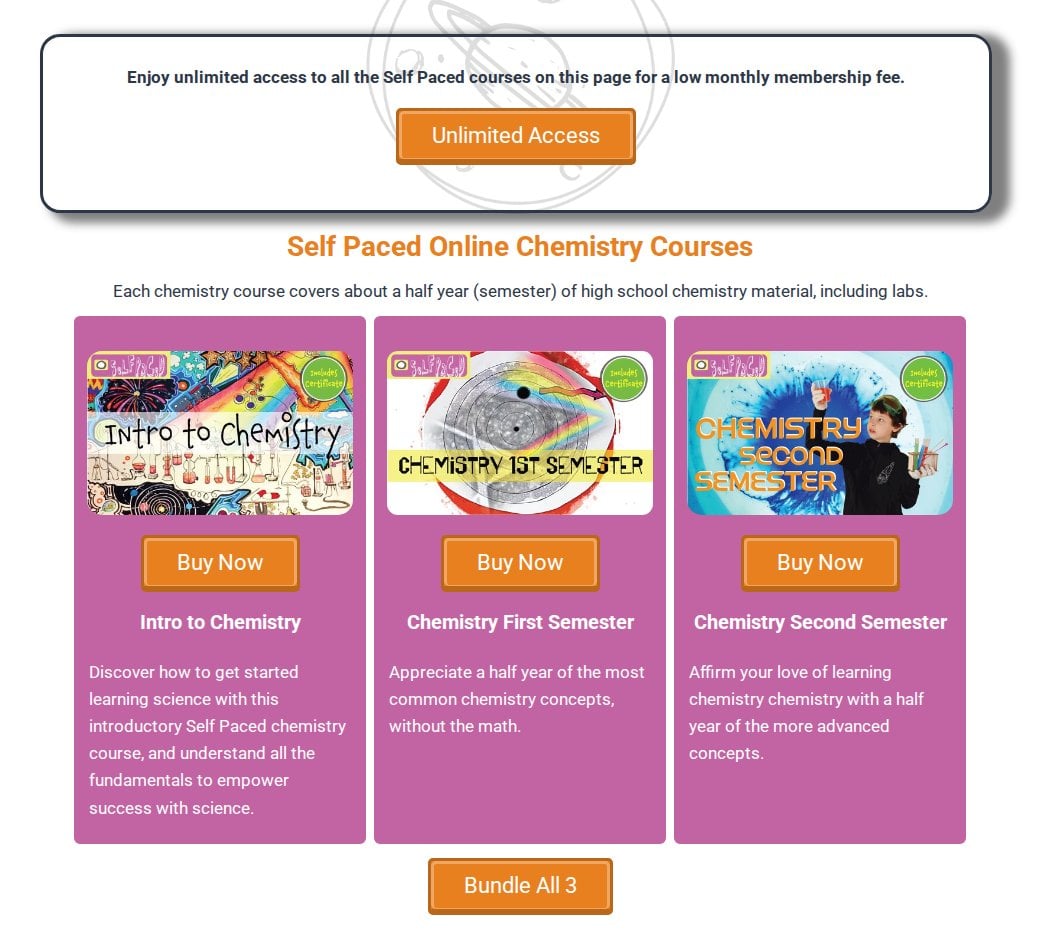
Families can choose between two main ways of accessing the material.
Self-Paced Membership for $20 Per Month
The lower-priced option gives unlimited access to every self-paced course for $20 per month.
Students can watch the videos, complete worksheets, and use the answer keys and explainer videos to check their work. There’s no individual grading or personal teacher support included. Instead, parents do the grading while their children work through the lessons independently.
For families who are comfortable managing their own schedules, it’s an affordable way to access the course material.
Supported Courses with Personal Help
For families who want more involvement from a teacher, Scott sells individual courses and bundles for about $300 to $400.
Families can purchase courses with a one-time payment and keep access for life. The whole family can use the materials, while grading and certification are included for one learner. Additional learners can be added for a fee, and Scott also offers support through email and Zoom.
Customer preferences have changed considerably since the business began.
Before the pandemic, most families preferred supported courses. They wanted a real teacher, personal grading, someone to ask questions, and help getting started on the first day.
Since then, demand has shifted toward the lower-priced membership. Scott thinks many families grew tired of having so many teachers during the pandemic and now want the course material to be as streamlined and flexible as possible.
By offering both options, Scott serves the bottom and the top of the market with the same courses, without having to produce separate sets of material.
Growing Through Search Engines, Worksheets, and Word of Mouth
Scott learned that creating a good course doesn’t guarantee anyone will buy it. He needed to attract students.
From the start, search engine traffic was his main source of new customers.
He created pages aimed at people searching for help with particular science topics, each built around a free worksheet that parents could download and use with their children.
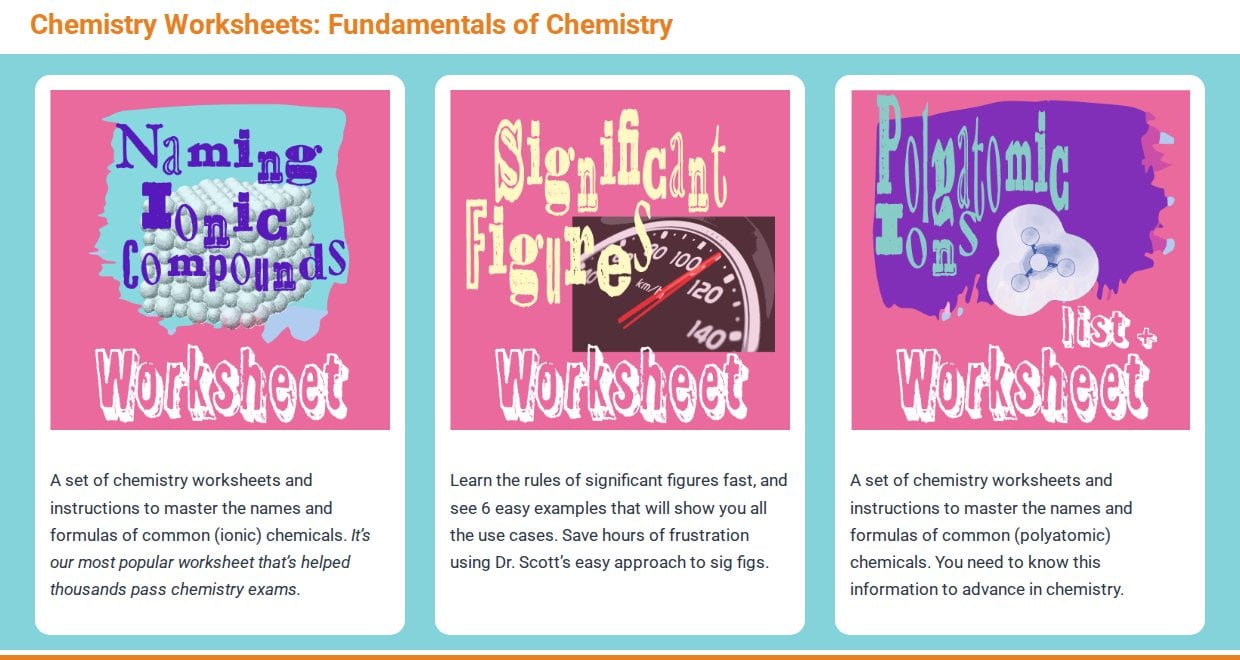
Over time, Scott created about 500 of these pages. They attracted families searching for science worksheets and explanations, even if they weren’t ready to buy a complete course.
Visitors could download a worksheet, see how Scott taught the subject, and explore the lessons available. Families who wanted to save the time could then buy the full course and have Scott do the teaching for them.
Word of mouth also brought in students. Social media never worked for him, so he put his effort into content and his website instead.
Marketing was one of the biggest challenges of Scott’s early years as a course creator.
“Making the course is half the work, and selling the course is the other half of the work.”
Dr. Scott Beaver, Founder of Learn with Dr. Scott
He initially concentrated on producing lots of small courses, assuming that good teaching material would attract enough customers. More lessons didn’t lead to more sales.
Looking back, Scott says it would have been more strategic to make one course and spend a year marketing it. He thinks he lost a year or two by not focusing on marketing sooner.
Reaching Students Around the World
The COVID-19 pandemic brought a sudden increase in demand for online education. As schools closed and families searched for alternatives, Scott’s business grew almost overnight.
At the height of that demand, Scott was teaching around 1,000 students, with learners joining from nearly every English-speaking country in the world.
Teaching live classes across several continents created some unusual scheduling problems.
During one live class, a student in Australia kept her lights off. Her parents eventually explained that it was 4 a.m. there, because the lesson had been scheduled for 4 p.m. in the United States.
From then on, Scott planned class times around the clock, and classes often started with students calling out the time in five or six different time zones.
As schools reopened and demand changed, Scott’s audience became more concentrated in North America. By 2026, Scott’s audience was concentrated in the United States and Canada, with an estimated 90/10 split between the two countries. His courses follow US and Canadian school standards.
He also stopped offering live classes, concentrating on recorded lessons that students can access whenever they want.
Over the years, Scott has experimented with subjects beyond the hard sciences, including Spanish, art, and web design. He also runs Medium, an art and meditation space in Oaxaca, Mexico, where he lives. But the main focus of Learn with Dr. Scott remains science and math education for homeschooling families.
Adapting to Changes in Online Education
Running an online education business has taught Scott to expect changes in demand. For years, sales followed the school calendar.
More serious families bought supported courses in June and July to prepare for the new school year. The busiest period came between mid-September and mid-October, when homeschooling families were getting started.
There was another increase in January and February, as parents replaced curricula that hadn’t worked out during the first half of the school year. May was always quiet.
That pattern has recently broken. The usual January and February sales never came. Then, in the summer of 2026, sales arrived in May, June, and July, months when Scott doesn’t market at all.
Scott thinks artificial intelligence explains both. Many parents now use free AI tools instead of buying an online course. At the same time, his traffic from social media and organic search hasn’t grown, so his assumption is that AI tools are recommending his website and sending him new visitors.
He doesn’t yet know what the new cycle will look like. As he puts it, it’s an online business and things move fast, so he recalibrates every year.
Owning his website gives him the freedom to do that without depending on another teaching platform’s rules or business decisions.
The Freedom to Build a Business Around Teaching
Running his own education business has given Scott something he values as much as the opportunity to teach: independence.
“It’s real true freedom.”
Dr. Scott Beaver, Founder of Learn with Dr. Scott
Scott can decide where he lives, how he works, and which projects he wants to pursue. It’s the independence he was looking for when he first decided to build his own learning platform.
Running a small business still brings challenges. Scott calls it a rollercoaster: sometimes the money is good and sometimes it isn’t. But the decisions are his to make.
Today, Scott lives in Mexico, where he continues teaching online while making time for travel, art, and his other interests.
With WordPress and LifterLMS, Scott can keep developing his courses, changing his pricing, and adapting his teaching methods without relying on the decisions of a third-party platform.
And despite the occasional difficult period, he still loves running the business.
What Other Course Creators Can Learn from Dr. Scott
Scott’s experience offers plenty of lessons for teachers who want to take their knowledge online.
He started with one tutoring session and gradually built a business that has served students around the world.
Building the business required more than creating good lessons. Scott had to learn how to attract customers and understand what they needed from an online education provider.
His move toward homeschooling families changed how he developed and marketed his courses. Parents needed reliable science lessons their children could follow without hours of preparation or direct teaching at home, and Scott built his offer around exactly that.
His two pricing options reflect another important part of the business: different families need different levels of support. Offering a low-cost membership and a supported purchase lets Scott serve both without developing separate courses for each group.
Throughout the business’s growth, Scott has remained committed to running his own learning platform. Control over his website, courses, and teaching methods has let him experiment, respond to changing demand, and build a business that fits the way he wants to work.
His advice for teachers considering a similar path is to be consistent. Pick one thing, spend an hour a day on it for the next couple of years, and give marketing as much attention as course creation.
“Teachers think, ‘Oh, it’s a good class. It’ll sell.’ No, it won’t. You do have to sell it.”
Dr. Scott Beaver, Founder of Learn with Dr. Scott
Build Your Own Online Teaching Business with LifterLMS
Whether you want to turn your classroom lessons into self-paced courses, offer personal teacher support, or create a membership for your students, LifterLMS gives you the tools to build and sell online courses with WordPress.
You can manage your courses and student access on a website you control, with the freedom to shape your teaching business around your students’ needs.